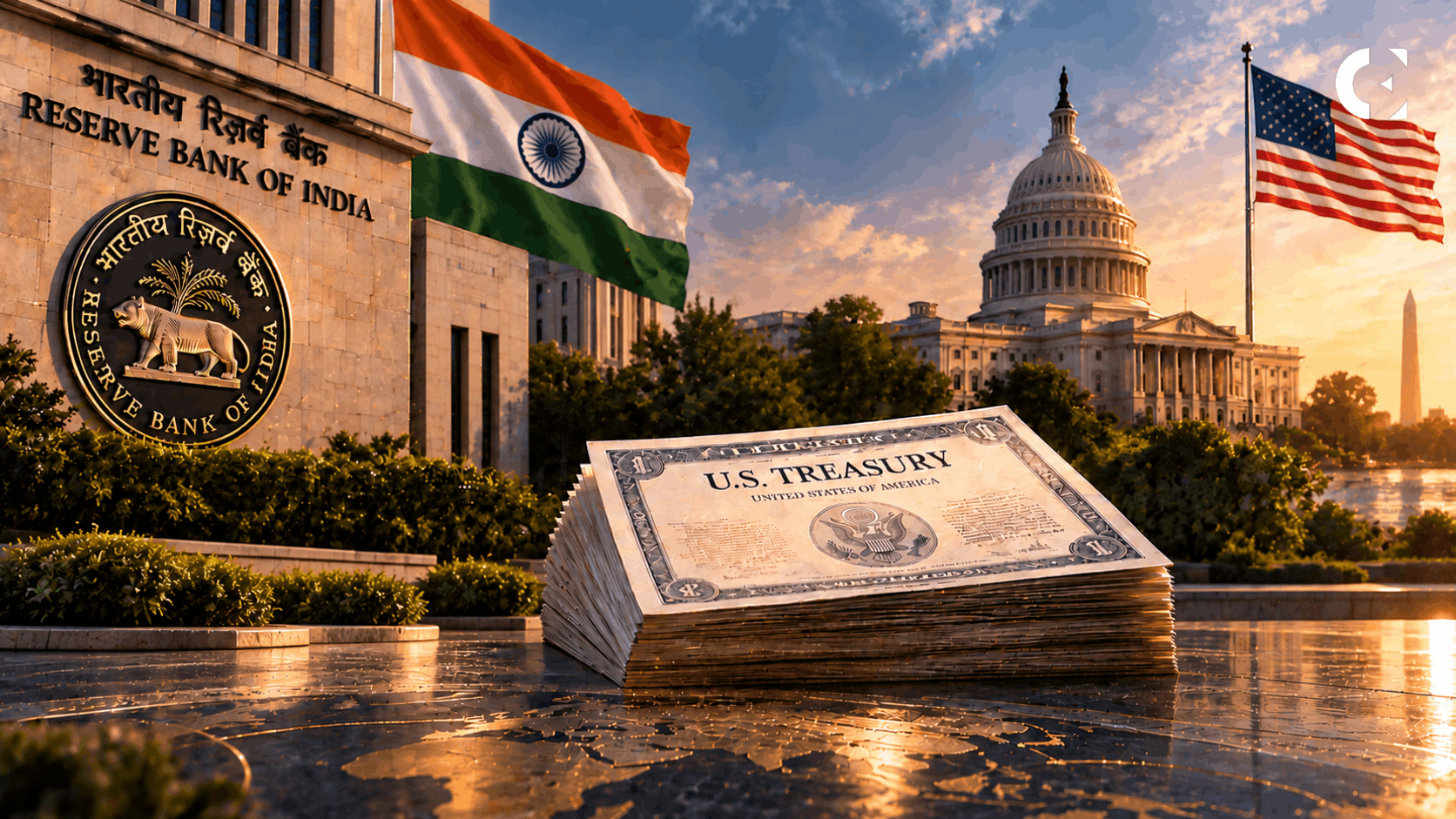

- India bought a record $15.2B in U.S. Treasuries, lifting holdings to a 10-month high.
- RBI schemes drew $136.3B in inflows, helping lift forex reserves to a record $785.7B.
- Treasury purchases show reserve allocation, not a shift in monetary policy.
India bought a record $15.2 billion in U.S. Treasuries in July, lifting its holdings to their highest level in 10 months. The increase followed a Reserve Bank of India foreign-currency scheme that drew overseas funding, linking reserve accumulation with renewed investment in U.S. government debt. The acceleration halted months of declining Treasury exposure as India expanded its gold holdings.
Foreign-Currency Scheme Drives Reserve Growth
The RBI introduced swap facilities in June to encourage foreign-currency deposits and overseas borrowing. Concessional hedging arrangements helped banks attract funds, largely through deposits from non-resident Indians.
These measures attracted $136.3 billion between June and August. As banks exchanged incoming foreign currency with the RBI, the central bank accumulated dollars that it then invested in global assets. The inflows helped lift India’s foreign-exchange reserves to a record $785.7 billion.
Incoming Dollars Flow Into Treasuries
The incoming foreign currency has to be invested somewhere, and U.S. Treasuries provide a liquid, interest-bearing option for those funds. By buying these securities, the RBI can earn returns on the dollars it absorbs from the banking system.
Those returns can help offset the costs of the concessional swap schemes used to attract the funds. However, that does not mean the program is automatically profitable, as the overall outcome depends on how those returns compare with the scheme’s costs.
The structure also creates future obligations, since some of the inflows are tied to foreign-currency liabilities. As a result, higher reserves do not fully translate into freely usable funds.
Reserve Deployment, Not a Policy Shift
The July increase reflects how the RBI is allocating its growing pool of foreign reserves, rather than signaling a broader policy shift. Investing in U.S. Treasuries helps manage dollar holdings, but it does not directly affect the rupee liquidity already injected into the banking system.
Instead, the move highlights a shift in reserve composition, with higher exposure to U.S. government debt in the near term. The longer-term balance between Treasuries and gold remains a separate strategic decision.
Related: Why Higher US Yields Are Making India Less Attractive to Foreign Investors
Disclaimer: The information presented in this article is for informational and educational purposes only. The article does not constitute financial advice or advice of any kind. Coin Edition is not responsible for any losses incurred as a result of the utilization of content, products, or services mentioned. Readers are advised to exercise caution before taking any action related to the company.