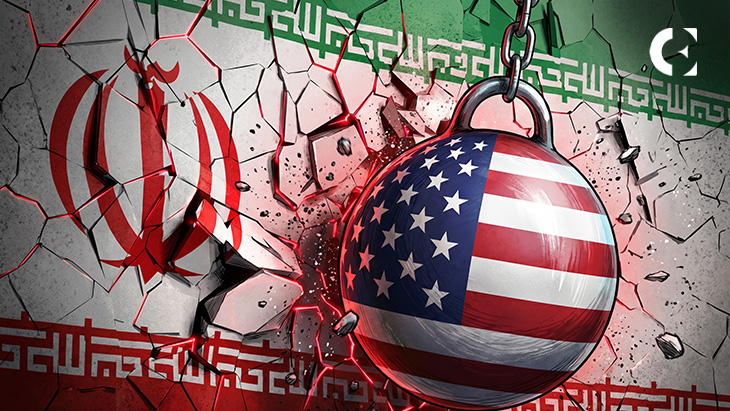

- Trump reportedly rejected Iran’s seven-day plan to fully reopen the Hormuz waterway.
- Brent crude oil could surge to $150 a barrel if the crisis drags on for much longer.
- Bitcoin often sells off early like stocks during big geopolitical shocks today.
Iran is waiting for an official response from Washington after the Wall Street Journal reported that President Donald Trump rejected Tehran’s offer to reopen the Strait of Hormuz and pause fighting across the Middle East within seven days.
What Iran Actually Offered
Iran took its seven-day plan to the United Nations General Assembly, saying the offer had already reached US officials through Qatari mediators.
Foreign Minister Abbas Araqchi said the deal was clear. If the US lifted its naval blockade, released Iran’s frozen funds, and dropped oil sanctions, Iran would reopen the strait and halt hostilities within a week.
“If there is seriousness on the US side to come to a deal and reopen the Strait of Hormuz, everything is now prepared,” he said.
Trump, according to the report, was skeptical Iran would follow through and told his staff he expects fighting to resume, possibly after November’s midterms.
Why This Matters More Than The Politics
For traders, the real story is not diplomacy itself. It is what happens next if the deal collapses and the strait stays shut.
Nearly a fifth of the world’s oil moves through that strait. Iran has kept it largely blocked since the war started in February, and the impact is starting to show.
What Happens To Oil If The Strait Stays Closed?
Brookings Institution researchers warned that Brent crude could climb toward $150 a barrel once emergency oil reserves run dry, likely by mid-July. That would break the 2022 record of $139 a barrel set after Russia invaded Ukraine.
There is already a preview of this. When the war first broke out, Brent jumped from around $72 a barrel to as high as $123 before easing closer to $100 as talks progressed.
Could Renewed Fighting Trigger Another Oil Spike?
Yes, and it would not stop at oil. Higher crude prices tend to push up gasoline and diesel costs quickly, which feeds straight into inflation and raises the odds of a broader economic slowdown.
What About Gold?
Gold usually rallies when fear rises, but this war has been more complicated. Gold actually slid from record highs above $5,300 an ounce to the $4,000 to $4,300 range, as oil-driven inflation fears pushed the Federal Reserve toward higher rates and a stronger dollar, which weighed on gold even during the conflict.
If tensions flare again, gold’s next move could depend on which force wins out: fear-driven buying or a stronger dollar pulling it down.
Where Does Bitcoin Fit In?
Bitcoin has increasingly traded like a risk asset rather than a safe haven during geopolitical shocks, often falling alongside stocks in the first wave of panic before any later recovery.
A renewed US-Iran conflict could trigger the same pattern, a quick sell-off as investors de-risk, followed by choppy trading tied to how oil and inflation numbers move afterward.
What Should Traders Watch Next?
Three things matter most from here. Whether Washington issues a formal response to Iran’s offer, whether shipping through the strait actually resumes, and how quickly emergency oil reserves get used up if it does not.
Related: Bitcoin Price LIVE: Bullish Weekly Close Could Open a Path Toward $100K
Related: 24 Hour Crypto Recap: Here’s What Happened in the Market
Disclaimer: The information presented in this article is for informational and educational purposes only. The article does not constitute financial advice or advice of any kind. Coin Edition is not responsible for any losses incurred as a result of the utilization of content, products, or services mentioned. Readers are advised to exercise caution before taking any action related to the company.