
- Orlen’s failed Venezuela oil deal resulted in an estimated $424 million loss.
- Polish authorities charged three former Orlen executives in August for asset neglect.
- Blockchain proves USDT transfers, but can’t guarantee physical oil delivery or rights.
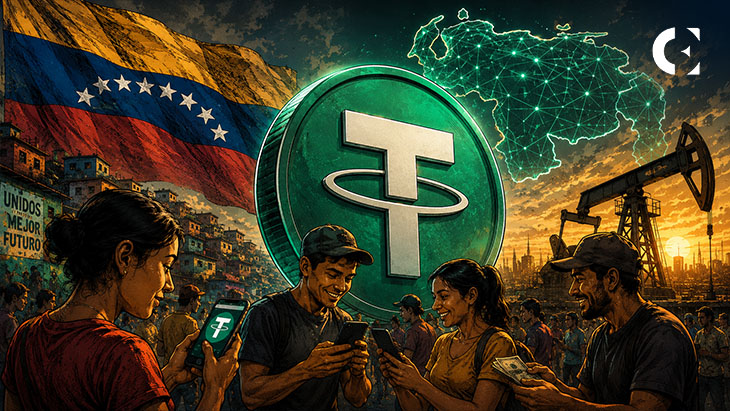
A failed Venezuelan oil deal involving Poland’s state-owned energy giant Orlen is putting a spotlight on a tricky stablecoin problem – just because blockchain allows for fast transfer of funds doesn’t mean the person or company on the other end is safe to deal with.
Back in late 2023, Orlen’s Swiss trading unit, Orlen Trading Switzerland (OTS), struck a deal with a Dubai middleman called Hannon International to buy about 6 million barrels of Venezuelan Merey 16 crude.
The contract was worth roughly $345 million, and OTS paid about $230 million upfront. It was reported that much of the payment was made using Tether’s USDT.
However, for the most part, the oil never showed up, as only a small fraction of the expected shipment was ever received.
Orlen racked up high costs after sending tankers to Venezuela that couldn’t load the crude they were supposed to pick up. When all the costs are factored in, the damage has been estimated at around $424 million.
This brought attention to Poland’s Internal Security Agency, as the situation turned into a major criminal investigation. The agency said the criminal case involves about $378 million in losses connected to three bad oil deals.
Additionally, in August, Polish authorities charged three former Orlen executives, claiming they failed to properly oversee and protect the company’s assets.
Former OTS chief Samer Awad is also facing a separate investigation after being detained in the UAE last year, with prosecutors alleging that several contracts caused serious damage.
USDT Doesn’t Solve the Counterparty Risk
The stablecoin element matters here because Venezuela had been leaning more and more on crypto for oil deals after getting cut off from much of the regular banking world. USDT gave the country a dollar-linked digital currency that could be passed between parties without relying on traditional correspondent banks.
While that kind of flexibility can be useful in legitimate commodity deals, it doesn’t fix the core problem of counterparty risk.
A blockchain record can prove USDT was sent, but it can’t guarantee the person on the other end actually has legitimate oil supplies, the right to deliver it, or will fulfill the agreement.
Traditional commodity deals can use tools like letters of credit, escrow, documentation requirements, and payment-on-delivery terms to reduce the above risk. An earlier trade finance review of the OTS case pointed out that safeguards like letters of credit were missing.
The incident shows that while USDT can speed up cross-border payments and make them more flexible, it can’t replace due diligence or proper trade finance controls.
Related: Trader Loses $2.1M USDT After Scammers Hijack Partner’s Telegram Account
Disclaimer: The information presented in this article is for informational and educational purposes only. The article does not constitute financial advice or advice of any kind. Coin Edition is not responsible for any losses incurred as a result of the utilization of content, products, or services mentioned. Readers are advised to exercise caution before taking any action related to the company.