

- Michael Saylor says Bitcoin-backed companies and institutions offer a solution to fiat currencies losing value over time.
- Research claims the average fiat currency lasts just 27 years before being replaced, reformed, or collapsing.
- Bitcoin proponents argue BTC is a stronger long-term store of value
Michael Saylor has joined the conversation criticizing fiat currencies, arguing that Bitcoin-backed institutions represent the solution to a monetary system that he says is destined to lose value over time.
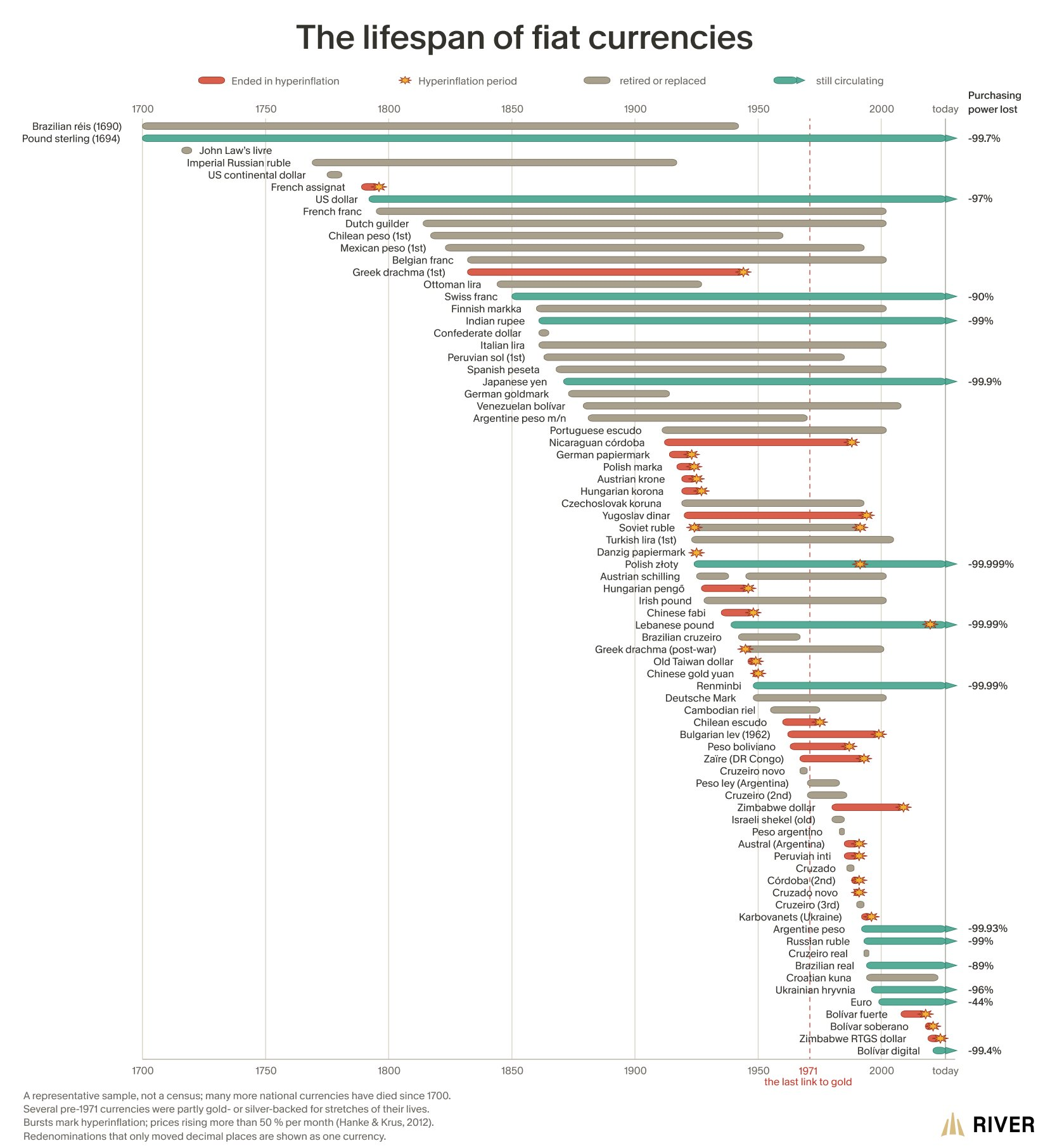
The Strategy executive chairman made the comments while responding to a chart shared by Bitcoin-focused financial services firm River. The chart claimed that the average fiat currency survives just 27 years before being replaced, reformed, or collapsing.
“Bitcoin Is the Solution to Fiat”
In a post on X, Saylor wrote, “Fiat currency is the problem.”
Meanwhile, he said that technologies, companies, and institutions that strengthen Bitcoin are “part of the solution” to the fiat problem.
Notably, River’s infographic, titled The Lifespan of Fiat Currencies, tracks the history of dozens of national currencies since the 1700s. The chart categorizes currencies that ended through hyperinflation, were replaced or retired, or remain in circulation, while highlighting the purchasing power many have lost over time.
Study Says Average Fiat Currency Lasts 27 Years
River’s post builds on research by DollarDaze, which examined 775 fiat currencies throughout history. According to the study, the average lifespan of a fiat currency is 27 years, although outcomes vary significantly.
The research found that:
- 20% of fiat currencies failed due to hyperinflation.
- 21% were destroyed by war.
- 12% disappeared following political independence.
- 24% were replaced through monetary reforms.
- 23% remain in circulation but continue to lose purchasing power or face eventual replacement.
The study also notes that the shortest-lived fiat currency lasted just one month.
Related: Fidelity Says Bitcoin May Be in Accumulation Zone
British Pound Highlights Long-Term Purchasing Power Loss
The British pound sterling, established in 1694, is identified as the oldest fiat currency still in existence. Despite its longevity, the pound has suffered substantial erosion in purchasing power.
Originally defined as 12 ounces of silver, the pound has lost approximately 99.5% of its original value over more than three centuries, according to the research.
River’s chart similarly shows several long-standing currencies—including the U.S. dollar, Swiss franc, Japanese yen, and euro—remaining in circulation even as they experience considerable long-term declines in purchasing power.
Bitcoin Narrative
River noted that the original idea behind money was that it should be scarce. “People agreed for thousands of years that money should be scarce,” the firm said. However, it argued that fiat currencies undermine that principle “to enrich the few.”
Meanwhile, River concluded that Bitcoin gives people a way to fight back.
Essentially, Bitcoin supporters view BTC as a better long-term store of value than government-issued money because fiat currencies tend to lose value over time due to inflation. Moreover, they argue that Bitcoin is more accessible than traditional stores of value such as gold.
While inflation is a reason to adopt Bitcoin, many economists believe moderate inflation is a deliberate feature of modern monetary policy, designed to support economic growth and employment rather than preserve purchasing power indefinitely.
Related: Strategy CEO Ensures Long-Term Commitment to Bitcoin in Talk
Disclaimer: The information presented in this article is for informational and educational purposes only. The article does not constitute financial advice or advice of any kind. Coin Edition is not responsible for any losses incurred as a result of the utilization of content, products, or services mentioned. Readers are advised to exercise caution before taking any action related to the company.