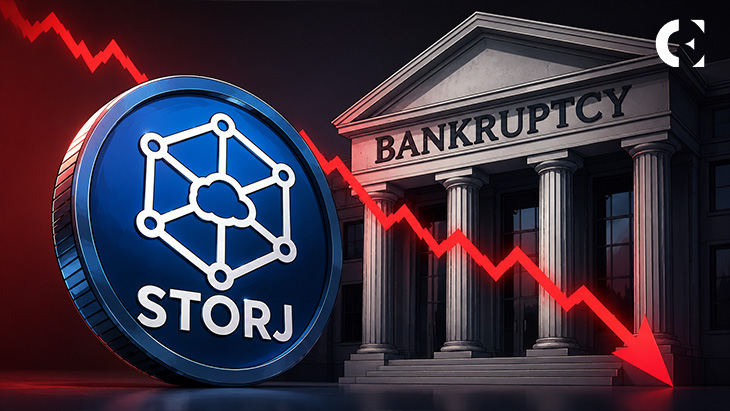

- Storj token dropped 17% after Storj Labs filed for Chapter 11 bankruptcy protection in the U.S.
- The company says customer services and its decentralized storage network will continue uninterrupted.
- Storj raised about $30 million in its 2017 ICO before entering restructuring nearly a decade later.
Storj’s native token, STORJ, fell 17% today after Storj Labs, the company behind the decentralized cloud storage network, filed for Chapter 11 bankruptcy protection in the United States.
The company said the filing is meant to restructure legacy liabilities while keeping normal business operations running.
According to a July 26 announcement, Storj Labs voluntarily filed for Chapter 11 in the U.S. Bankruptcy Court for the Northern District of West Virginia. It said the restructuring will address legacy obligations while preserving its core business. Customer services and the decentralized storage network will continue without interruption.
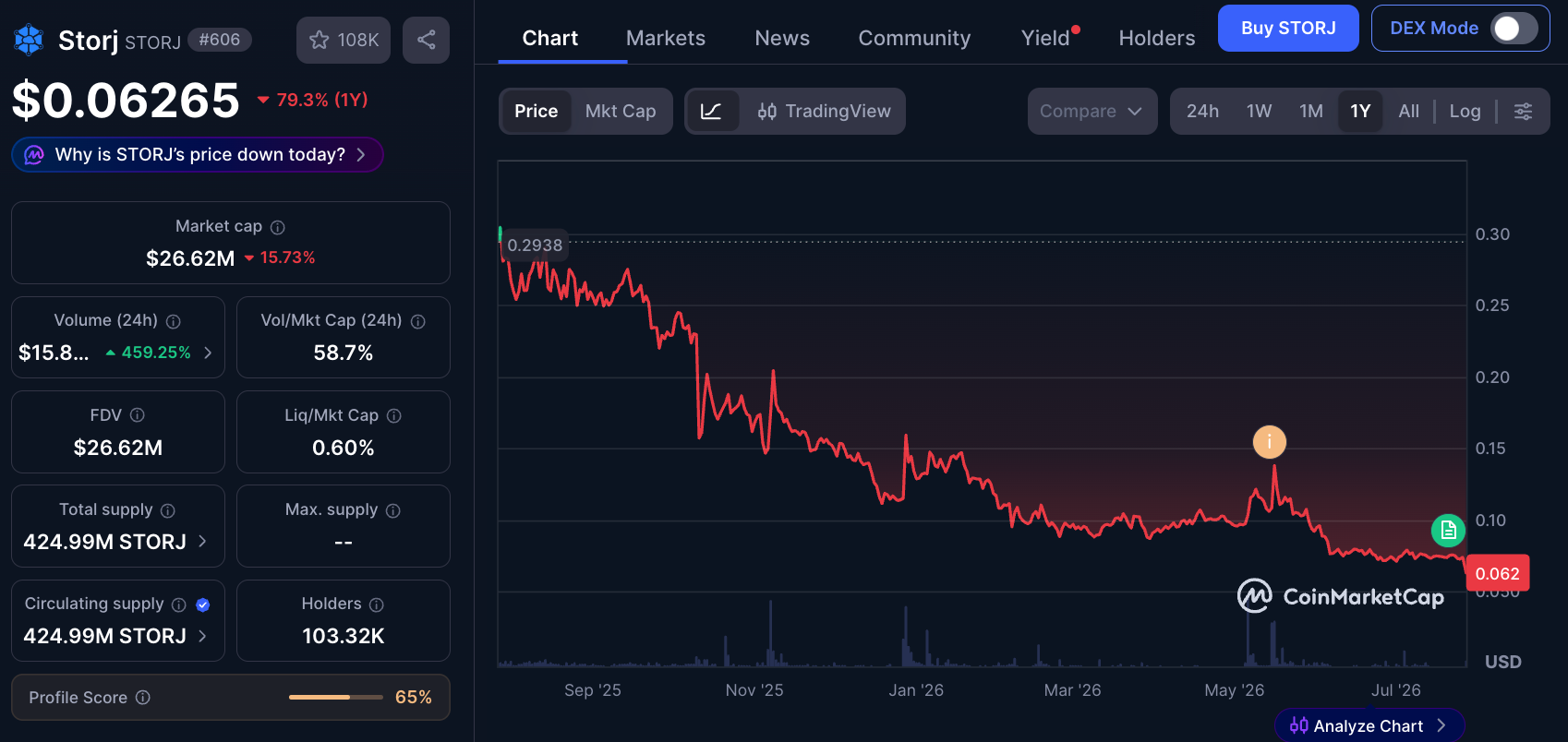
At the time of writing, STORJ traded at $0.06271. The token is down about 99% from its 2021 all-time high of $3.91 and has lost roughly 79% over the past year, extending its long decline since the previous crypto bull market.
Company Expects Business as Usual
Storj said it expects to continue operating normally throughout the bankruptcy process and anticipates no disruption to customer services.
“This is a decisive, positive step,” said Kaloyan Raev, Director of Software Engineering at Storj. He said the business remains fundamentally strong, but legacy obligations from an earlier period have weighed on the company.
According to Raev, the restructuring will create a cleaner financial foundation while allowing management, token holders, the decentralized community, and investors to participate in ownership of the reorganized company.
The company also said it has narrowed its focus to its core decentralized cloud storage business. It has exited previous acquisitions and other non-core operations. Parent company Inveniam backed the restructuring, calling it the right path toward long-term sustainability.
From a $30 Million Token Sale to Bankruptcy
Storj Labs was one of the better-known blockchain infrastructure projects during the 2017 initial coin offering (ICO) boom.
The company raised about $30 million through its Ethereum-based STORJ token sale, reaching its fundraising target in just seven days. Including other funding rounds, Storj raised roughly $35 million.
At the time, the company positioned its decentralized cloud storage network as an alternative to traditional data centers. It highlighted partnerships with Microsoft Azure and Heroku, along with a network of thousands of storage providers.
Part of a Wave of Crypto Restructurings
Storj Labs’ Chapter 11 filing is the latest in a string of restructurings and closures across the crypto industry this month.
On July 15, Movement Labs filed for Subchapter V bankruptcy protection. Poolin entered bankruptcy proceedings on July 22 and put its Texas mining sites up for sale.
This month, BitMEX also announced it would shut down after 11 years of operation, while BitMart disclosed plans to cease operations.
Related: BitMEX to Shut Down Crypto Exchange After 11 Years of Operations
The series of announcements has led some market observers to argue that many crypto companies are now dealing with liabilities accumulated during previous bull-market expansions.
According to commentary shared on X, many firms raised significant capital during earlier market cycles. However, the obligations tied to that funding continued to grow as market conditions worsened. In several cases, support from parent companies was not enough to avoid restructuring or closure.
Storj’s case is drawing particular attention because it tests one of the core promises of decentralized physical infrastructure (DePIN): that the network can continue operating even if the company behind it enters financial restructuring.
Storj Labs said its decentralized storage network, customer services, and users will continue operating without interruption throughout the Chapter 11 process.
Disclaimer: The information presented in this article is for informational and educational purposes only. The article does not constitute financial advice or advice of any kind. Coin Edition is not responsible for any losses incurred as a result of the utilization of content, products, or services mentioned. Readers are advised to exercise caution before taking any action related to the company.