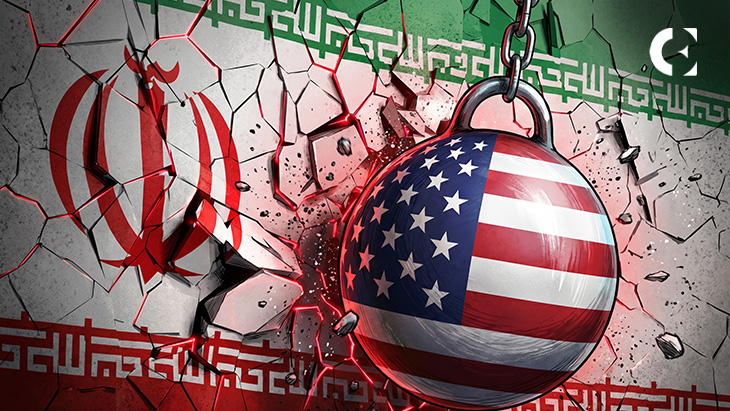

- Trump is sending Steve Witkoff and Jared Kushner to Pakistan for a second round of Iran talks as per the Kobeissi letter post.
- Oil prices fell after the talks, matching the market reaction flagged by The Kobeissi Letter.
- The $334 million USDT freeze yesterday was linked to Iran, specifically suspected Iranian sanctions evasion.
Fresh diplomacy and crypto compliance enforcement converged on the Iran story again, sending oil lower and raising new questions about how sanctions pressure is moving across both energy markets and stablecoin rails.
The Kobeissi Letter said that President Donald Trump is sending Steve Witkoff and Jared Kushner to Pakistan for a second round of Iranian talks. Reports also confirmed the involvement of Iran’s foreign minister, while Vice President JD Vance is not currently expected to join unless the talks show progress.
The market reaction came quickly. The Kobeissi Letter said oil fell to a new intraday low on the news, and that renewed diplomatic contact tends to ease some near-term supply fears around the U.S.-Iran conflict.
Pakistan Returns to the Center of the U.S.-Iran Channel
Pakistan is again serving as the mediator between Washington and Tehran, with Iranian Foreign Minister Abbas Araqchi expected in Islamabad and U.S. officials traveling soon. On one hand, that creates a visible diplomatic opening after the latest rupture in talks.
On the other hand, Reuters also reported that peace talks had not yet fully materialized in Islamabad as of April 24, even after days of security preparations and road closures.
Notably, CoinEdition had already reported earlier this week that Iran was open to discussions in Pakistan only if Washington stopped using pressure and threats. That condition remains important since the diplomatic channel is open, but still narrow.
$344 Million USDT Freeze Adds Sanctions-Enforcement
At the same time, another Iran-related narrative picked up in crypto markets after a large USDT freeze. MartyParty posted on X that the $344 million USDT freeze was linked specifically to Iran and suspected sanctions evasion.
However, publicly available reporting on the freeze was more cautious. Reporters said Tether froze more than $344 million in USDT across two Tron addresses in coordination with U.S. authorities over information allegedly linked to sanctions evasion, criminal networks, or other illicit activity.
Nevertheless, the timing has drawn attention as it lands at the same moment the U.S. is reopening a Pakistan-mediated diplomatic channel with Tehran, and sanctions pressure remains central to the broader conflict.
Energy, Diplomacy, and Stablecoins: A Conversation
The two stories connect through the same macro theme. Sanctions and de-escalation now matter across both oil and crypto. Oil fell on signs that U.S.-Iran talks may restart in Islamabad.
Meanwhile, the large USDT freeze reinforced the idea that dollar-linked stablecoins remain part of the global enforcement toolkit when authorities identify suspicious flows.
Even so, both stories point in the same direction; the Iran file is no longer moving only through diplomacy and oil routes. It is also moving through financial surveillance, sanctions enforcement, and crypto infrastructure.
Related: White House Confirms Trump Will Address $TRUMP Holders at April 25 Gala
Disclaimer: The information presented in this article is for informational and educational purposes only. The article does not constitute financial advice or advice of any kind. Coin Edition is not responsible for any losses incurred as a result of the utilization of content, products, or services mentioned. Readers are advised to exercise caution before taking any action related to the company.