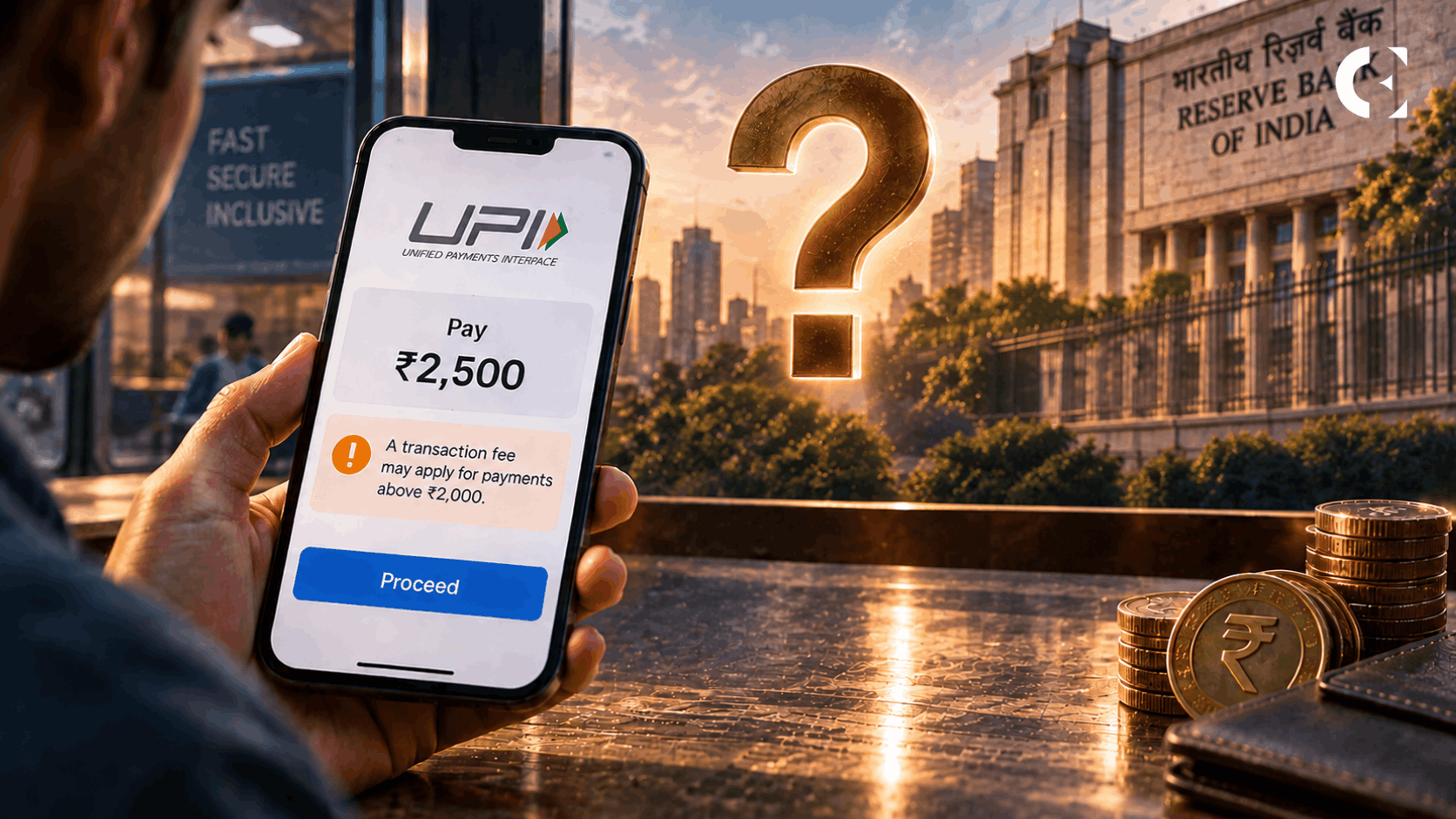

- UPI MDR rollout may be delayed from October 15 to January 1, 2027.
- Select UPI merchant payments above ₹2,000 may attract a 0.4% MDR.
- Paytm, MobiKwik and Pine Labs stocks fell amid concerns over delayed MDR revenue.
India’s proposed UPI charges are once again in the spotlight. Now, the focus is on a possible delay, with the uncertainty already affecting digital payments stocks. Amid rising concerns about the new MDR rules, trader groups are urging the government to give more time to prepare before the changes take effect.
India’s UPI MDR Rollout Faces Delay
Today’s Reuters report revealed a possible delay in the proposed UPI Merchant Discount Rate (MDR). The change was initially scheduled to take effect on October 15. But the proposal now faces a fresh setback, as trader groups cite concerns about confusion among merchants and the timing of the festive season.
Notably, the organizations are asking the authority to push the move to January 1, 2027, sparking speculation about a possible delay. However, the government hasn’t issued the final decision.
What Changes Under the New UPI MDR Rules?
As reported by CoinEdition, UPI payments above ₹2,000 made to merchants will face a 0.4% Merchant Discount Rate (MDR). The charges will affect merchants, not customers. It will be capped at ₹300 for transactions of ₹75,000 or more. For example, a ₹3,000 UPI payment will result in an MDR of ₹12.
At the same time, payments between individuals remain free. This means that people can send money using UPI to their friends and family without charges and limitations. Merchant payments of up to ₹2,000 also remain free. This means that about 96% of merchant transactions will remain unaffected by the new rules.
Why Traders Want the UPI MDR Rollout Delayed
It is worth noting that the new UPI MDR rules still remain unclear for many merchants as well as customers. Especially, merchants remain confused about how the system would work. They are also concerned about the upcoming festive season, when UPI payments and retail activity are usually high.
If the rule is pushed toward January 1, 2027, from the initially scheduled October 15, they believe the additional time would give merchants more understanding of the new rules. The merchants could also prepare to adapt themselves to the system or find some alternative ways to make payments easier.
(adsbygoogle = window.adsbygoogle || []).push({});Digital Payments Stocks are Falling
Significantly, the current uncertainty surrounding the UPI MDR rollout has affected the stock market, particularly the shares of digital payments companies. These shares have seen a notable decline on Thursday after reports suggested that the new UPI fee could be delayed to January 2027.
While Paytm shares dropped by 5.5%, MobiKwik stock fell by around 7%. At the same time, Pine Labs declined by around 3% during the session.
It is important to mention that the sell-off is linked to investor expectations around the new UPI MDR revenue. If the UPI MDR rules imposed fees from October, payment companies were expected to benefit from it. But the possible delay is pushing back the potential revenue boost and keeping uncertainty around the sector for a long time.
Related: US ISM Manufacturing PMI Hits 4-Year High; Stock and Crypto Markets Eye Rally
Disclaimer: The information presented in this article is for informational and educational purposes only. The article does not constitute financial advice or advice of any kind. Coin Edition is not responsible for any losses incurred as a result of the utilization of content, products, or services mentioned. Readers are advised to exercise caution before taking any action related to the company.