

- USD/INR closed at 96.42, its highest level in two months and 0.54 below the record.
- Foreign investors sold nearly $29B in Indian equities as the rupee fell almost 7% in 2026.
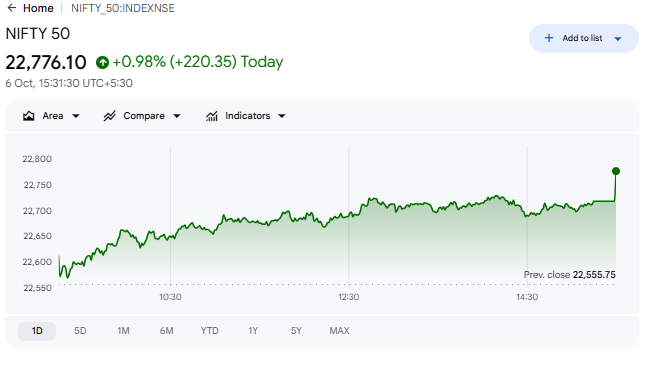
- Nifty 50 rose 0.98%, and Sensex gained 0.95%, showing no broad panic over trade tensions.
The USD/INR pair reached 96.42 amid foreign outflows, stalled trade progress, and positioning ahead of Wednesday’s RBI decision.
| USD/INR PAIR CLOSE | RECORD REFERENCE | 2026 RUPEE DECLINE | EQUITY OUTFLOWS |
| 96.42 | 96.96 | Nearly 7% | Nearly $29 billion |
Trade Stalemate Adds Pressure Without Triggering a Shock
USD/INR rose to 96.42 on Tuesday, leaving the rupee 0.54 below the 96.96 record reached last quarter. The move followed Sitharaman’s statement that negotiations had reached a plateau as further compromises were becoming increasingly difficult.
However, she did not say the talks had ended, and reports that India had canceled negotiations or walked away were inaccurate. The initial market reaction was also limited, with the rupee ending Monday at 96.2925 per dollar, compared with 96.3150 previously.
Meanwhile, a stronger dollar and elevated crude prices added pressure on the currency, although likely RBI intervention helped contain losses. As a result, Tuesday’s move reflected several overlapping pressures rather than a standalone reaction to the trade impasse.
Indian Stocks Rally Despite Rising Rupee and Trade Pressure
Despite the currency weakness, Indian equities provided a clear counterpoint to the foreign-exchange market. The Nifty 50 advanced 0.98% to 22,776.10, while the Sensex gained 0.95% to 73,067.81. Moreover, 14 of 16 major sector indexes rose, alongside gains in mid-cap and small-cap shares.
At the same time, oil prices fell almost 2%, offering some relief as India remains heavily dependent on imported crude. However, trade uncertainty still matters given that the U.S. is India’s largest export destination. Exports to the U.S. reached $42.79 billion between April and August, up from $40.39 billion a year earlier.
Market focus: Is the trade impasse adding pressure to an already weak currency rather than creating a wider financial-market shock?

RBI Rate Decision Becomes the Next Test for USD/INR
Against that backdrop, foreign portfolio flows remain a more immediate source of currency pressure. Foreign investors have sold nearly $29 billion of Indian equities in 2026, while the rupee has depreciated almost 7% against the dollar.
Looking ahead, a Reuters poll expects USD/INR near 96.50 by March 2027 and 97.50 within one year. However, the immediate focus remains the RBI’s policy decision.
Around 35 of 61 economists surveyed by Reuters expect a 25-basis-point repo-rate increase from 5.25%. Meanwhile, swap markets have priced in a quarter-point increase while assigning some probability to a 50-basis-point move.
Bond markets have also reflected those expectations. The benchmark 2036 government bond yield reached about 7.22%, extending a seven-week increase as traders prepared for tighter monetary policy.
Levels That Define the Next USD/INR Test
| LEVEL | MARKET ROLE |
| 96.42 | Tuesday close and two-month high |
| 96.50 | Reuters poll level for March 2027 |
| 96.96 | Record reached last quarter |
| 97.50 | Reuters poll level within one year |
RUPEE SUPPORT
On the supportive side, swap markets have priced in a quarter-point rate increase, while RBI dollar sales have previously limited depreciation.
RUPEE PRESSURE
However, several headwinds remain in place. Foreign outflows, U.S. yields, oil prices, and unresolved trade uncertainty continue to pressure the currency.
BOTTOM LINE
Overall, USD/INR moved closer to its 96.96 record, but the broader market response remained contained. Indian stocks rallied while oil prices fell, indicating that the trade impasse has not triggered widespread financial-market stress.
FAQs
Foreign equity outflows remained the most immediate source of pressure, while traders also positioned ahead of the RBI policy decision.
No. Sitharaman said negotiations remain underway, with limited room for additional concessions.
The Nifty 50 rose 0.98%, while the Sensex gained 0.95%.
It is the record reached last quarter and the nearest major reference above Tuesday’s close.
Wednesday’s RBI policy decision is the immediate focus for currency and bond markets.
Related: Why a Bond Market Crisis Could Send Bitcoin Above $100K: Fundstrat
Disclaimer: The information presented in this article is for informational and educational purposes only. The article does not constitute financial advice or advice of any kind. Coin Edition is not responsible for any losses incurred as a result of the utilization of content, products, or services mentioned. Readers are advised to exercise caution before taking any action related to the company.