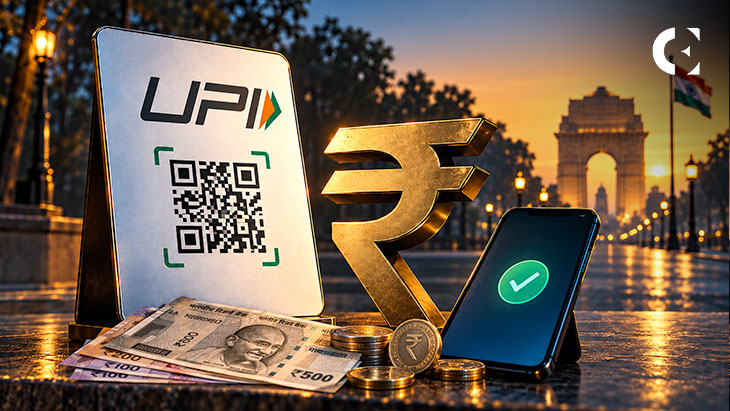

- The new capital market Merchant Discount Rate of 0.02% takes effect from October 15.
- Kamath proposed a lower cap of 5 to 10 rupees instead of the current ₹300 cap.
- Quarterly settlement rules add another layer of cost exposure for brokers.
Zerodha co-founder Nithin Kamath has backed the National Payments Corporation of India’s (NPCI) new Merchant Discount Rate (MDR) on UPI, calling it “probably inevitable” given how widely the payment system has been adopted.
But he flagged a specific problem with how the rate applies to capital market transactions, one that could quietly reshape the economics behind India’s zero-brokerage trading model.
UPI Was Built Into India’s Retail Trading Boom
Zerodha and other brokers currently let customers add funds via UPI at no cost, alongside IMPS, while net banking transfers typically carry a small fee around ₹9. That free, instant funding flow has been central to how Indian retail trading platforms operate, letting customers move money in and out of broking accounts without friction or cost.
What the New 0.02% MDR Actually Changes
Under the framework NPCI announced, effective October 15, UPI payments to mutual funds, SEBI-registered brokers, dealers, and investment platforms will attract an MDR of 0.02%, capped at ₹300 per transaction.
The charge applies specifically to capital market transactions and covers broker wallet top-ups as well as equity and debt-linked payments. UPI AutoPay mandates, including SIPs set up through AutoPay, are exempt from the charge. NPCI has been explicit that this is a merchant-side cost, not a fee passed directly to customers, and banks have been instructed to ensure merchants don’t pass MDR charges on to consumers.
Why Brokers Are Worried About the Cost
Kamath’s concern is that brokers have no way to guarantee that a UPI transfer results in an actual trade. “As brokers, we can’t force a customer to trade after transferring money,” he said, warning that if brokers can’t pass the charge to customers, “there is essentially no limit” to the cost a customer could impose without generating any revenue.
SEBI’s quarterly settlement rule forces brokers to send unused client funds back every quarter. More than half of those funds come back in via UPI, Kamath said, meaning the rule itself generates repeated money movement brokers now have to pay for, with no benefit attached.
Will Brokers Absorb It or Find Other Ways to Recover It?
Zerodha doesn’t charge brokerage on equity delivery trades because the math currently works. Kamath’s question is whether that math still works if every UPI transfer, trade or no trade, comes with a cost attached. His fix: shrink the cap specifically for broking to ₹5 or ₹10, instead of ₹300, arguing that’s far more reasonable given how much money moves through broker accounts without ever becoming a transaction.
The Bigger Question for India’s Zero-Brokerage Model
For now, official messaging from NPCI maintains that UPI stays free for consumers, with MDR treated as a cost absorbed within the merchant payment ecosystem. Whether brokers absorb the new capital market MDR as a business cost or find indirect ways to recover it, through funding screens, convenience charges, or account-level adjustments, remains the open question industry watchers are tracking ahead of the October 15 effective date.
Related: UPI MDR Above ₹2,000: How the New Merchant Charge Actually Works
Disclaimer: The information presented in this article is for informational and educational purposes only. The article does not constitute financial advice or advice of any kind. Coin Edition is not responsible for any losses incurred as a result of the utilization of content, products, or services mentioned. Readers are advised to exercise caution before taking any action related to the company.