

- Bitcoin trades above $77K as LTH inflows rise, but spot buying remains weak in markets.
- Whales shift BTC back to exchanges after buying near $78K, raising selling pressure now.
- Miner caution and ETF outflows keep Bitcoin downside risk active near key support levels.
Bitcoin traded above $77,000 on Thursday as market sentiment improved on hopes of a possible U.S.-Iran peace deal. However, CryptoQuant data showed a divided market, with long-term holders, whales, miners, derivatives traders, and ETF investors sending mixed signals.
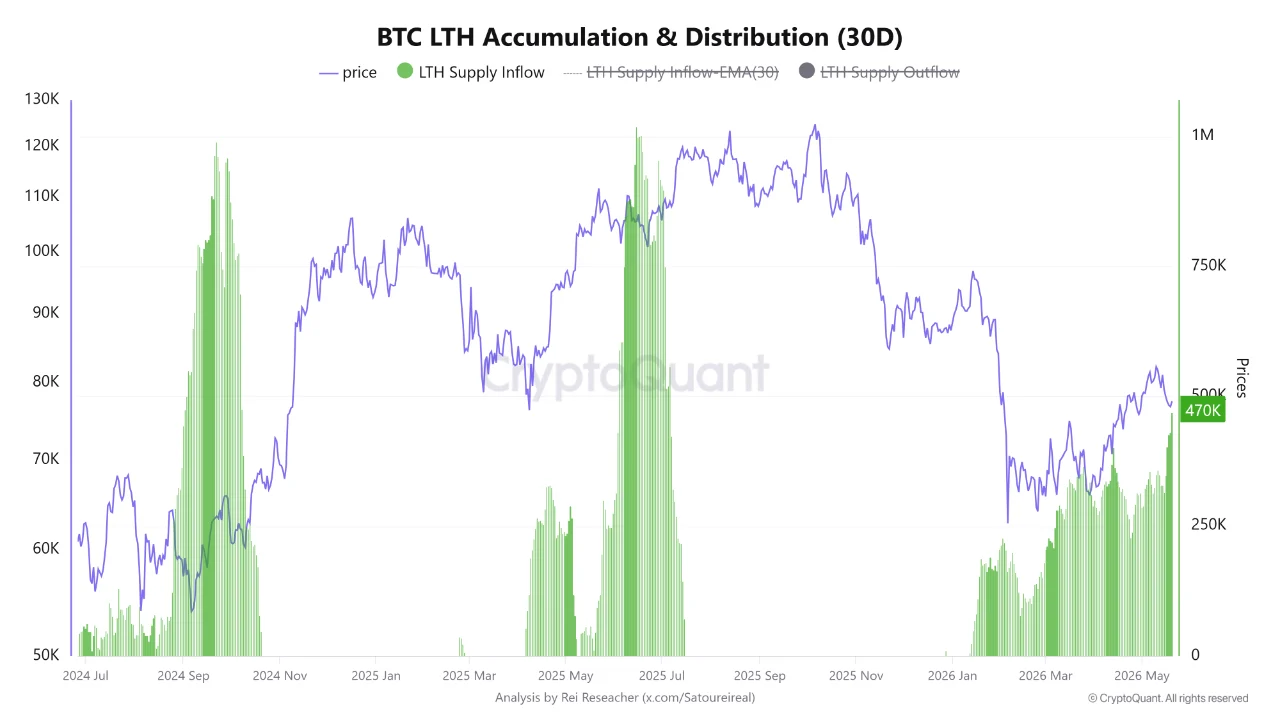
CryptoQuant data showed a sharp rise in the Long-Term Holder Supply Inflow metric between March and May 2026. The metric reached nearly 470,000 BTC as the price recovered near the $75,000 to $80,000 range.
Source: CryptoQuant
Bitcoin Longs Rise as Spot Demand Weakens
According to analysts, such movement points to stronger activity from long-term holders. Similar peaks appeared in September 2024 and June 2025 before upward market rallies.
Analysts said the latest rise may show accumulation pressure at current levels. Further monitoring is still needed before confirming a stronger market direction.
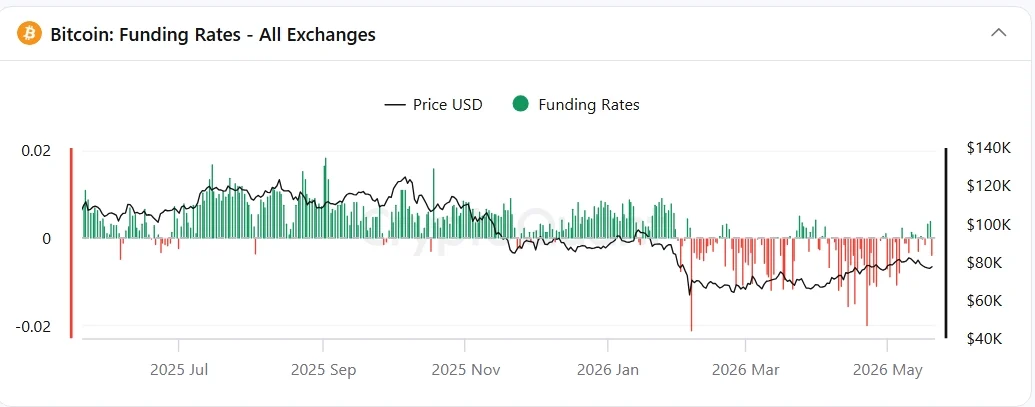
Derivatives data also showed a major change in trader positioning. CryptoQuant analysts said Bitcoin long positions have reached their highest level since 2023. This trend does not clearly show fresh spot accumulation. Instead, analysts said the move appears driven mainly by derivatives sentiment.
Funding rates are positive and rising at 0.0042. Long traders are paying short traders to keep bullish positions open. However, spot activity remains weaker by comparison. The taker buy/sell ratio stands at 0.95, showing limited aggressive buying.
Source: CrypotQuant
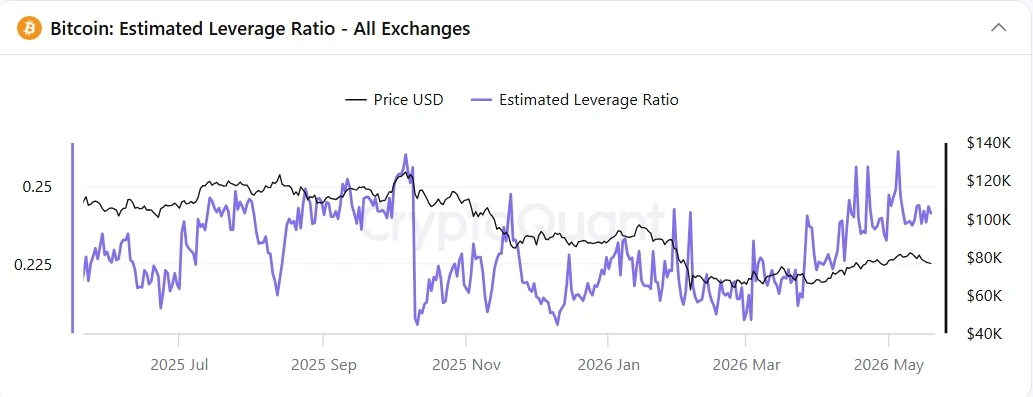
Exchange netflow also remains positive. More BTC is moving onto exchanges instead of leaving them for long-term holding. Open Interest and the Estimated Leverage Ratio have cooled slightly. That suggests traders are keeping current long exposure rather than adding heavy new leverage.
Source: CryptoQuant
However, whale activity showed another important pattern over the past 20 days. On-chain data pointed to accumulation, distribution, and continued selling pressure.
Whales Add Selling Pressure
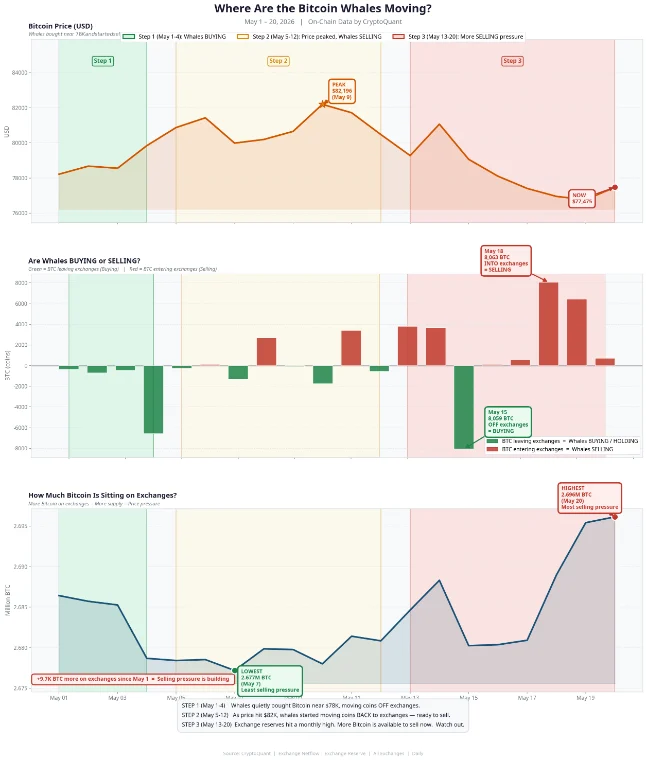
The analytical platform highlighted that from May 1 to May 4, whales moved Bitcoin off exchanges near $78,000. A single-day outflow of 6,590 BTC on May 4 confirmed large holder accumulation.
Momentum changed between May 5 and May 12. As Bitcoin climbed to $82,196, whales began sending coins back to exchanges. However, selling pressure continued from May 13 to May 20. A brief re-accumulation appeared on May 15, when exchange outflows reached 8,059 BTC.
Source: CrypotQuant
Even so, exchange reserves climbed from 2.677 million BTC to 2.696 million BTC. This marked the highest level of the month. On May 18, whales moved 8,063 BTC into exchanges in one day.
Overall, the data suggests whales bought near $78,000 and later distributed between $77,000 and $81,000. The $76,000 support zone now remains a key level for traders.
BTC Miners Hold Back as ETF Outflows Rise
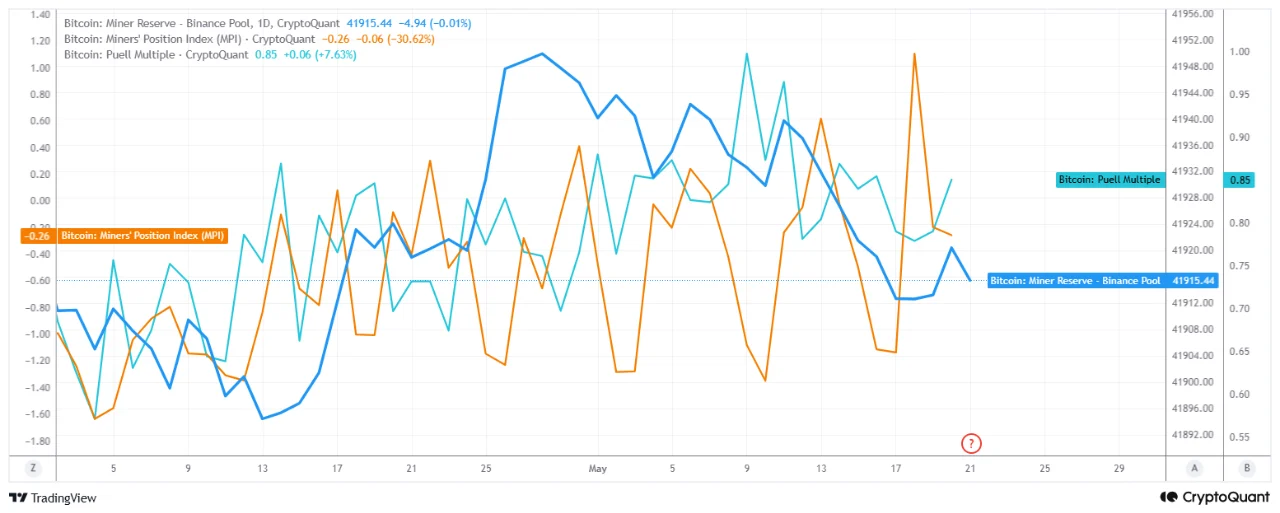
However, CryptoQuant analysts said Bitcoin miners do not appear convinced that Bitcoin has formed a firm market bottom. Binance Pool Miner Reserve data has continued to decline. This shows miners within the pool are still reducing their BTC holdings.
The analysts highlighted that Binance Pool represents a large share of global hash rate, analysts watch its reserve changes closely. Falling reserves usually point to ongoing operational selling pressure.
Source: CryptoQuant
However, the Miner Position Index remains negative. This means miners are not selling aggressively compared with historical averages. Current miner sales appear more necessity-based than panic-driven.
As a result, the risk of a sharp miner-led market drop remains limited for now. Puell Multiple data supports the same cautious view. The metric remains below 1, showing that miner revenue is still historically weak.
Bitcoin miners are not aggressively accumulating either. They appear to be waiting for a stronger bullish breakout before changing behavior.
However, institutional demand has also weakened this week. SoSoValue data showed U.S.-listed spot Bitcoin ETFs recorded $70.47 million in outflows on Wednesday.
That marked the fourth straight day of withdrawals since last week. If ETF outflows continue and deepen, Bitcoin could face renewed downside pressure.
Related: Why is ZEC Price Surging Today?
Disclaimer: The information presented in this article is for informational and educational purposes only. The article does not constitute financial advice or advice of any kind. Coin Edition is not responsible for any losses incurred as a result of the utilization of content, products, or services mentioned. Readers are advised to exercise caution before taking any action related to the company.