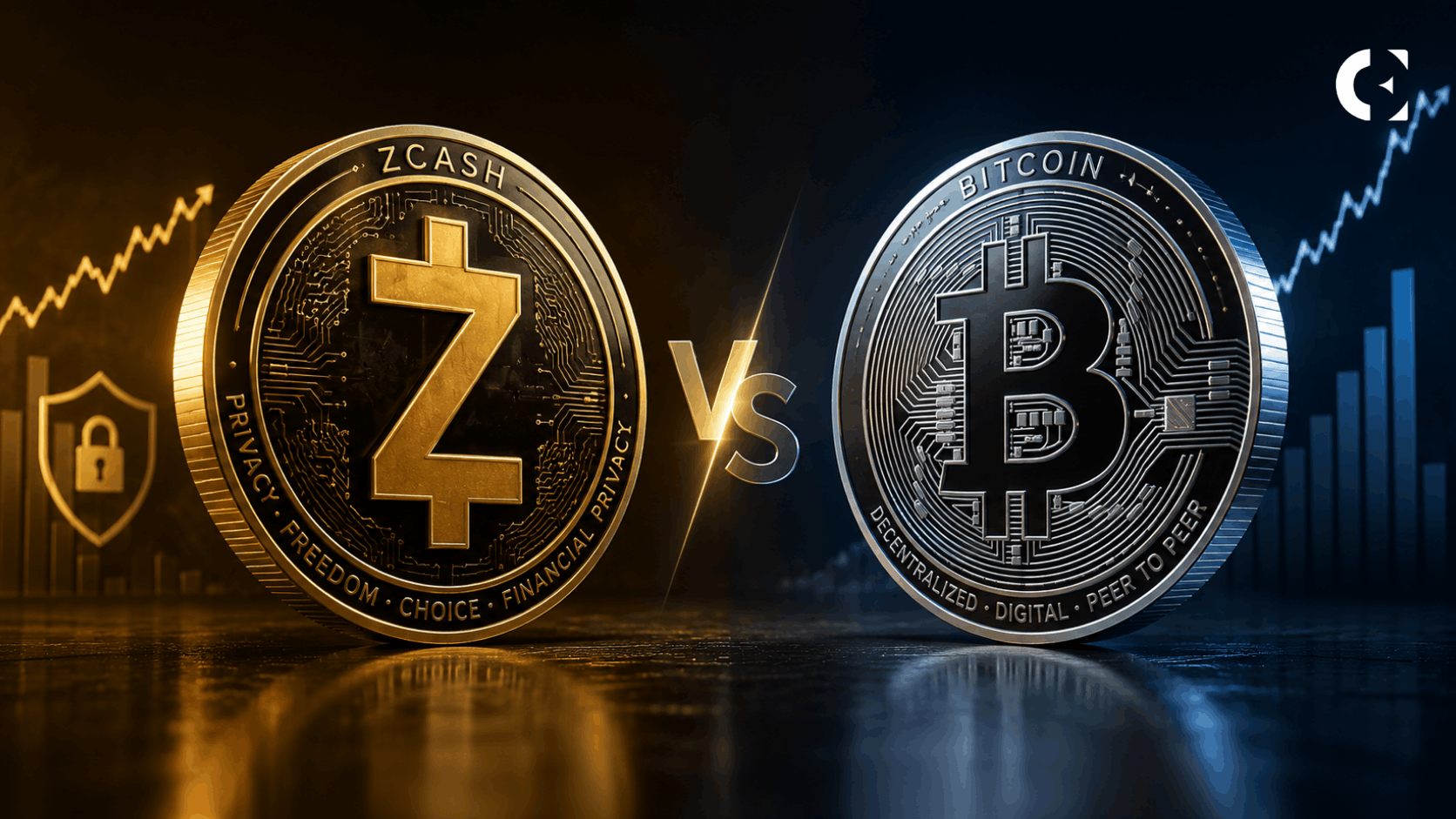

- Zcash targets $1,485–$2,500, with $1,100 serving as a critical support level.
- Bitcoin faces resistance at $86,700, with upside targets of $88,000–$93,000.
- Zcash offers higher-risk upside, while Bitcoin benefits from deeper liquidity and institutional demand.
Bitcoin (BTC) and Zcash (ZEC) present two distinct investment opportunities heading into the final quarter of 2026. Bitcoin is pursuing a recovery fueled by institutional demand, while Zcash is attracting attention following a strong rally driven by renewed interest in privacy cryptos.
Zcash recently climbed above $1,690 before retreating to $1,100, a 36% drop in three weeks. Despite the pullback, analysts have set ambitious price targets of $1,485, $2,500, and even $5,000.
Bitcoin, meanwhile, remains within a narrower trading range. While it has been stuck around the $80,000 region without much improvement, long-term forecasts remain bullish.
But many are wondering whether Zcash will continue outperforming Bitcoin or whether Bitcoin’s deeper liquidity and institutional demand will give it the advantage.
Zcash Bulls Target $1,485–$2,500
Analyst Javon Marks maintains a bullish outlook on Zcash following its breakout above $1,200, with price action pointing toward his $1,485.44 target.
However, analyst Celal Kucuker projects a more aggressive advance toward $2,500, which would put Zcash above Ethereum in price per coin.
His daily chart identifies a rounded-bottom pattern associated with accumulation. Using a previous rally of approximately 258% as a reference, his analysis establishes a target range of $2,450–$2,500.
Kucuker has also projected a move toward $5,000 using Fibonacci extensions and the structure of a previous major rally. These technical projections outline potential price scenarios rather than guaranteed outcomes.
Why $1,100 Is a Key Level for Zcash
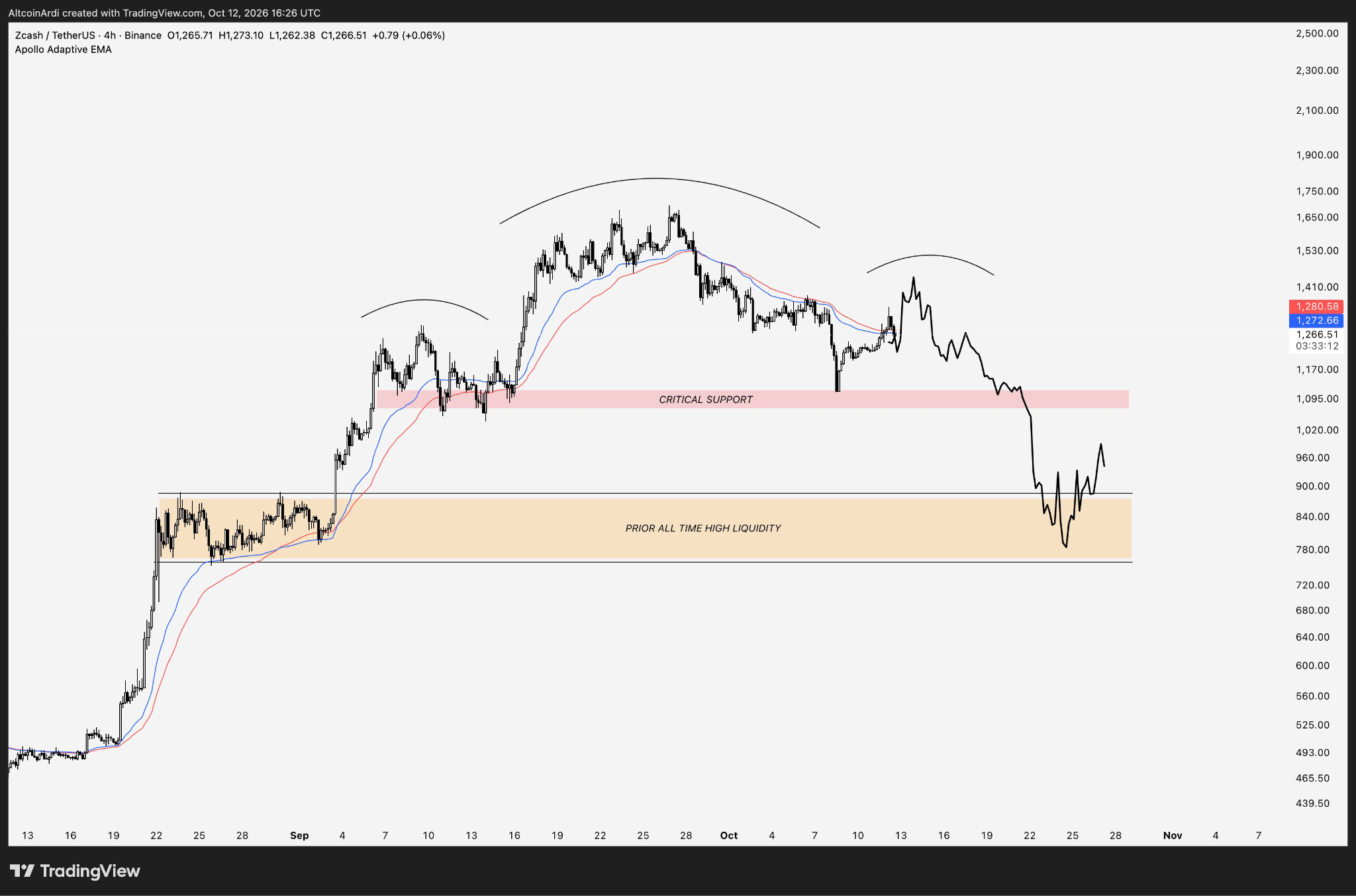
Bearish analysts are watching for signs that Zcash’s rally is losing momentum. Analyst Ardi warned that ZEC risks forming another lower high before breaking below $1,100. Such a move would complete a bearish head-and-shoulders pattern and expose the price to further losses.
Ardi identifies $1,100 as critical support. A breakdown below this level opens the way toward $780–$950, a zone the analyst identifies as a long-term bottom.
Conversely, holding $1,100 would strengthen the recovery outlook and reduce the immediate risk of a deeper correction.
Bitcoin Targets a Recovery Toward $88,000–$93,000
Meanwhile, Bitcoin’s short-term outlook hinges on a breakout from its current trading range. Analyst Ali Martinez identified a rising channel on Bitcoin’s four-hour chart. Following a bounce near $83,000, BTC has a potential path toward $88,000, with $93,000 as the next upside target.
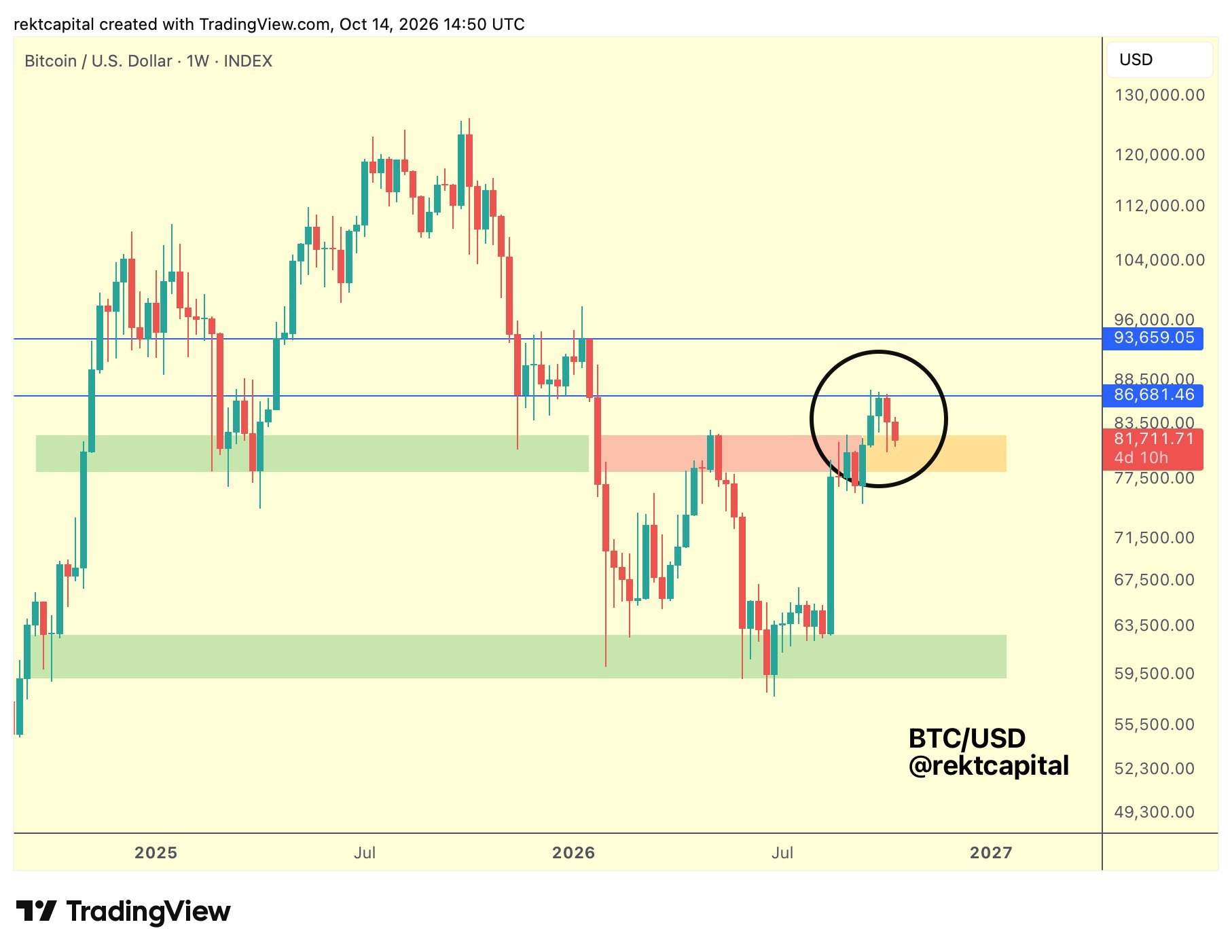
However, analyst Rekt Capital identified $86,700 as major resistance. Bitcoin recently failed to break above this threshold and remains within a range of approximately $82,500–$86,700.
According to Rekt Capital, BTC must hold $82,500 to preserve its bullish outlook. A breakdown below this level exposes Bitcoin to a broader $60,000–$80,000 range.
Bitcoin Analysts Project $180,000–$220,000
Despite recent weakness, several analysts maintain an optimistic long-term outlook for Bitcoin. Ted Pillows recently compared Bitcoin’s price movements with gold’s historical pattern.
His analysis points to the prospect of a consolidation phase followed by a major rally, pushing BTC above $200,000 during the current market cycle.
Another analyst, TRACER, outlined potential cycle highs of $69,000, $126,000, $180,000, and $220,000. His analysis uses a rising price channel to project progressively higher price levels over time.
These targets rely on historical patterns and technical projections and are not guaranteed outcomes.
Bitcoin Data Points to Easing Selling Pressure
Meanwhile, on-chain analyst Rain identified several indicators pointing to a potential short-term bottom for Bitcoin. According to analyst Rain, Bitcoin exchange reserves fell 1.7%, from 2.726 million BTC to 2.68 million BTC between September 20 and the latest observation.
The analyst also reported that large investors continued holding more than 3 million BTC despite Bitcoin’s decline from $87,000 to $80,000. Meanwhile, Bitcoin’s apparent demand was approaching neutral after remaining negative for much of 2026.
Declining exchange reserves indicate that fewer coins are immediately available for sale on exchanges. Continued holdings among large investors also point to persistent conviction.
Rain identified three conditions for stronger confirmation:
- consistently positive demand,
- increased spot buying, and
- fresh capital inflows into Bitcoin ETFs.
A combination of these factors would strengthen Bitcoin’s recovery and support a breakout above its current trading range. Without renewed demand, the rebound remains vulnerable to a reversal.
Bitcoin vs. Zcash: Which Is Better Positioned for Q4?
Zcash offers greater short-term upside potential, along with substantially higher volatility. Its breakout above a long-term downward trendline and bullish price projections support further gains if buyers defend $1,100.
However, the recent 36% decline underscores the downside risk. A breakdown below $1,100 exposes ZEC to the $780–$950 range.
Bitcoin offers a different proposition. Its short-term upside is less explosive, but deeper liquidity and stronger institutional participation support its position as a leading asset in a broader market recovery. A move toward $88,000–$93,000 depends on a breakout above resistance and continued support above $82,500.
Long-term targets of $180,000–$220,000 depend on sustained market strength, improving demand, and supportive institutional investment.
Moreover, the two cryptocurrencies also have distinct growth drivers. Zcash stands to benefit from rising demand for financial privacy, increased adoption of shielded transactions, and continued network development. Bitcoin’s performance is more closely tied to ETF flows, institutional investment, interest rates, overall market liquidity, and broader cryptocurrency market conditions.
The bottom line is that Zcash represents a higher-risk opportunity with greater potential for short-term gains, while Bitcoin offers more stable price performance with lower volatility. ZEC’s ability to hold $1,100 and BTC’s performance around $80,000 remain the key technical signals to watch in Q4 2026.
Related: Bitcoin, Stocks, and Metals Slide as Hot CPI Revives Fed Rate-Hike Fears
Disclaimer: The information presented in this article is for informational and educational purposes only. The article does not constitute financial advice or advice of any kind. Coin Edition is not responsible for any losses incurred as a result of the utilization of content, products, or services mentioned. Readers are advised to exercise caution before taking any action related to the company.