
- ESMA has set a January 8 deadline for EU-based CASPs to phase out unauthorized tokens.
- The latest mandate will divide stablecoin issuers into two distinctive categories.
- Stablecoin users face structural shifts at different levels following the latest mandate.
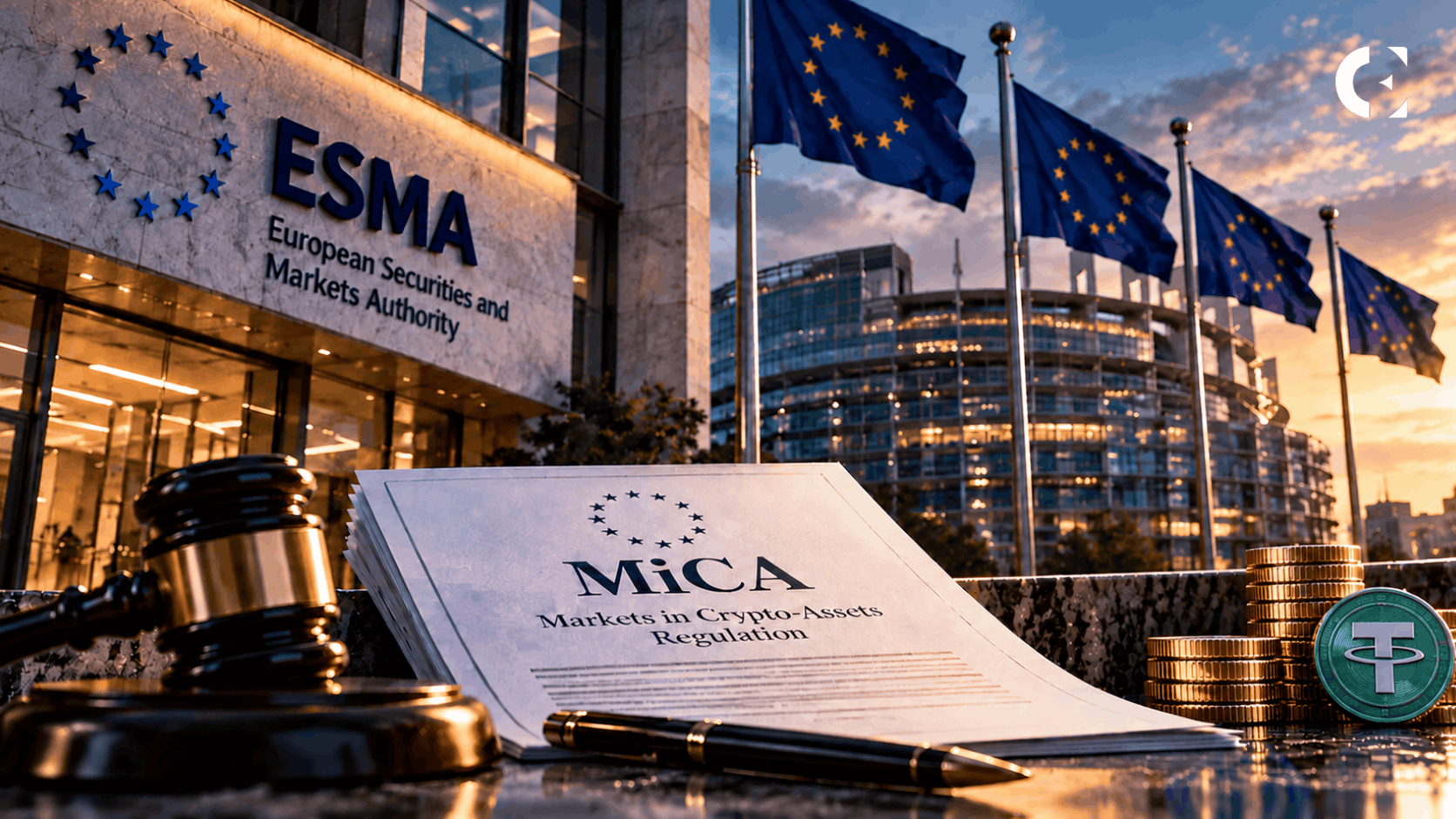
The European Securities and Markets Authority (ESMA) has announced a January 8, 2027 deadline for EU crypto-asset service providers (CASPs) to completely phase out services for unauthorized stablecoins. In its latest report, ESMA asked EU-licensed crypto firms to cease services involving unauthorized, non-MiCA-compliant stablecoins by the set deadline.
This guideline affects major assets, such as Tether (USDT), DAI (MakerDAO), and TUSD (TrueUSD), which currently lack approval under the EU’s Markets in Crypto-Assets (MiCA) framework.
ESMA’s Firm Position
Based on the latest ESMA instruction, CASPs must implement rigorous technical, contractual, and organizational controls to block EU clients from acquiring or increasing exposure to unauthorized tokens. This mandate is all-encompassing, covering all major crypto services, including trading platforms, custody, order execution, asset transfers, portfolio management, and investment advice.
The instructions are explicit and do not permit disclosure alternatives. The regulator stated that simply showing risk warnings or obtaining customer acknowledgments will not be accepted as a workaround. In the meantime, ESMA allows a window between the warning and the January deadline for firms to offer temporary, closely monitored services to help clients wind down positions safely. Services affected under this condition include liquidation, withdrawal, safekeeping, and conversion.
Effect on Stablecoin Issuers and Users
The ESMA directive significantly reshapes the operational landscape for stablecoin issuers, dividing them into two distinctive categories, those that adapt to the EU’s strict regulatory framework and those that remain outside it. Under this directive, non-compliant issuers will be completely locked out of the EU market. However, they may choose to comply with the rigorous operational requirements before the January 8, 2027 deadline to escape ESMA’s ban.
Going forward, EU-based institutional stablecoin users face immediate structural shifts in liquidity and settlement pipelines. They will be forced to migrate liquidity out of unauthorized stablecoin pairs, ban non-compliant stablecoins, and fragment their liquidity pools into “EU-compliant” venues and “Offshore/Global” venues.
Retail crypto investors will face issues such as forced portfolio conversion, mainly out of USDT held on regulated EU exchanges. However, they can still hold or trade non-compliant tokens via decentralized applications (dApps), though off-ramping to fiat inside the EU will become difficult. Meanwhile, delisting non-compliant tokens would reduce the number of direct spot and derivatives trading pairs on EU platforms, potentially leading to wider spreads and higher slippage during market transitions.
Related: EU Banks Partner With Fireblocks to Launch Regulated MiCA Stablecoin
Disclaimer: The information presented in this article is for informational and educational purposes only. The article does not constitute financial advice or advice of any kind. Coin Edition is not responsible for any losses incurred as a result of the utilization of content, products, or services mentioned. Readers are advised to exercise caution before taking any action related to the company.