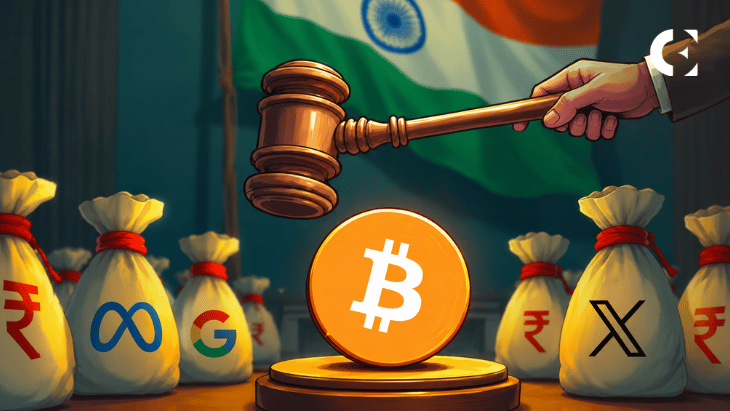

- India shifted its focus from crypto regulations, aiming to oversee the digital economy.
- The parliament has scheduled a meeting with representatives from social media platforms.
- The move comes following the 36-day student protests at Jantar Mantar.
The Indian government is tightening its control on the digital economy, expanding its focus beyond the crypto space. In the latest development, a parliamentary panel has summoned executives from top social media platforms, including Meta, X, Snapchat, and Google, on August 3, 2026, to discuss regulatory concerns. This indicates that the country is making significant efforts to bring clearer rules to the growing digital ecosystem.
It is worth noting that the event comes hot on the heels of India’s escalating discussions on crypto regulation. While the country is now switching its focus to social media platforms, it doesn’t mean that crypto has taken a back seat. Instead, it indicates that the government is taking a broader initiative to establish a regulatory framework for the country’s expanding digital space.
India Shifts Focus Beyond Crypto Regulation
According to the latest report from The Economic Times, the Indian parliament is taking a closer look at how social media and other online platforms are regulated across the country. As part of its regulatory efforts, the country has reportedly scheduled a meeting with top tech giants like Meta, Google, X, and Snapchat on August 3.
During this session, representatives from these companies will present their views on regulation to a panel of senior officials from the Ministry of Electronics and Information Technology (MeitY) and the Ministry of Home Affairs. While the main agenda of the meeting is digital space regulation, the government will focus especially on the platforms’ privacy protection and security measures.
While the session is exclusively on social media platforms and their oversight, it is closely connected to the country’s broader efforts to regulate the digital space, which includes crypto and blockchain. Despite the current focus, India has been taking efforts to create comprehensive crypto regulation in the country. Thus, the latest development says that India is not regulating crypto in isolation, but is looking for a wider set of rules for the larger digital economy.
Gen Z Protests Put Social Media Platforms Under Scrutiny
It is worth mentioning that the event comes after the 36-day student protests at Jantar Mantar over the NEET-UG paper leak. Social media platforms, especially Instagram, played a major role in this issue. Protesters, mostly Gen Z students, used the platform to share videos, live updates, and organize demonstrations. The protest ended with the resignation of the Union Education Minister Dharmendra Pradhan.
BJP MP Nishikant Dubey, who serves as the chairman of the Parliamentary Standing Committee on Communications and Information Technology, stated that the companies will be required to explain the ways they are protecting the privacy of women, children, farmers, rural communities, labourers, and the general public. The government intends to ensure that these platforms are not disrupting public order.
India’s Crypto Regulation Efforts Continue
Interestingly, India’s latest focus on social media platform regulations comes as part of the government’s broader efforts to oversee the online and digital spaces. Over the past few weeks, the country has been taking many initiatives to strengthen crypto regulations.
For instance, as CoinEdition recently reported, a parliamentary committee proposed creating a Self-Regulatory Organisation (SRO) for the country’s crypto regulations. At the same time, the government has also launched new crypto reporting guidelines to align with the global CARF standards.
Related: Why Is the Indian Rupee Hitting a Record Low Every Day? Full Details Explained
Disclaimer: The information presented in this article is for informational and educational purposes only. The article does not constitute financial advice or advice of any kind. Coin Edition is not responsible for any losses incurred as a result of the utilization of content, products, or services mentioned. Readers are advised to exercise caution before taking any action related to the company.