

- Two Satoshi-era wallets moved after 15 years, raising doubts over claims that Bitcoin was abandoned.
- New York plaintiffs seek control of 3.8 million Bitcoin across 39,069 dormant wallet addresses.
- Judge King blocked default judgment, setting a July 14 hearing on the lawsuit’s property claim.
A pair of Satoshi-era wallets linked to a New York ownership lawsuit moved funds after nearly 15 years, weakening claims that their coins were abandoned. The transfers involve addresses listed among 39,069 wallets that pseudonymous plaintiff “Noah Doe” says contain 3.8 million Bitcoin worth roughly $285 billion.
Satoshi-Era Wallets Move After Ownership Notices
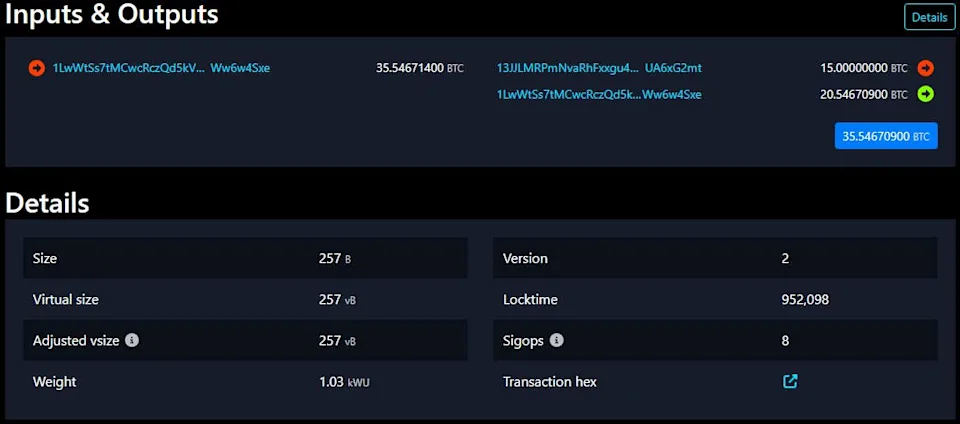
One address, 1LwWtSs7tMCwcRczQd5kVMv3xpWw6w4Sxe, received 35.55 BTC on March 27, 2011, when the asset traded below one dollar. Fast forward to June 2, the wallet sent 15 BTC to a new address and retained 20.55 BTC, according to a transaction recorded in block 952,104.
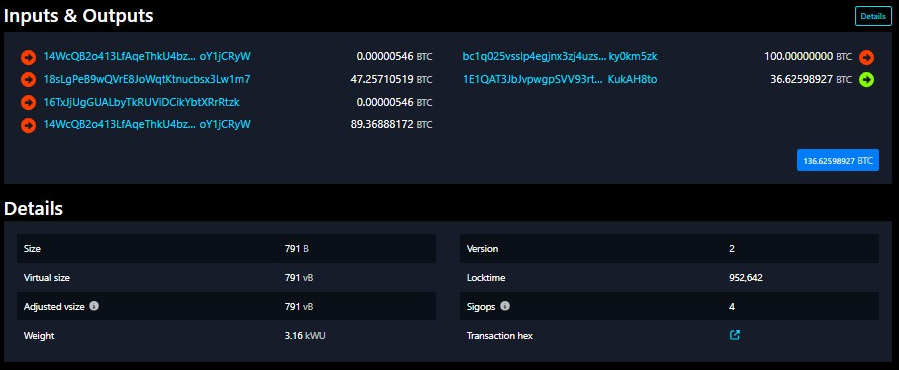
A second address, 18sLgPeB9wQVrE8JoWqtKtnucbsx3Lw1m7, first received 47.25 Bitcoin on June 17, 2011. That wallet then moved its entire balance on June 7 in block 952,642, ending almost 15 years of inactivity.
As a result, Galaxy Research flagged both transfers, while research head Alex Thorn said coins described as lost in the lawsuit were awakening and moving on-chain. Another dormant wallet moved 20 BTC, valued at $1.48 million, roughly 13 hours before the June 2 transfer.
However, that address was not named in the case and apparently received no ownership notice from the plaintiffs.
Noah Doe Claims Dormant Bitcoin Under New York Law
Per reports, Doe and two Wyoming companies filed the lawsuit on March 11, seeking legal ownership of coins held across the dormant addresses. The claim relies on Article 7-B of New York’s Personal Property Law, which governs procedures for reporting and claiming lost property.
The plaintiffs stored address details on USB drives and delivered them to an NYPD precinct between December 2024 and April 2025. They also sent OP_RETURN messages telling wallet holders to assert ownership within 90 days or risk having the assets classified as lost.
The recent transfers show that at least two listed wallets remained accessible, despite years without visible movement.
Judge Halts Default Judgment Before July 14 Hearing
Similarly, Attorney Ian R. Cohen filed an amicus brief on May 29 challenging the lawsuit’s legal basis before Judge Kathy King. Cohen argued that Article 7-B concerns tangible property and cannot transfer ownership of blockchain records that cannot be physically deposited with the police.
The brief also said inactivity alone does not prove abandonment, as relinquishment requires intent and an external act demonstrating that decision. On June 5, King halted progress toward a default judgment and scheduled a July 14 hearing on Cohen’s proposed intervention.
The case now combines an untested lost-property argument with fresh evidence that some supposedly abandoned Bitcoin remains controlled and transferable.
Related: Bitcoin Developer Pushes eCash Fork Targeting Satoshi Coins
Disclaimer: The information presented in this article is for informational and educational purposes only. The article does not constitute financial advice or advice of any kind. Coin Edition is not responsible for any losses incurred as a result of the utilization of content, products, or services mentioned. Readers are advised to exercise caution before taking any action related to the company.