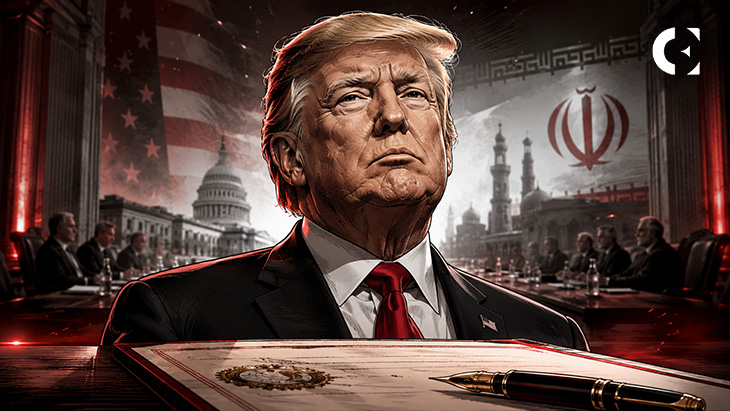

- Trump says the U.S. will either secure a favorable deal or walk away entirely.
- Trump hints at a major decision ahead, warning that “anything could happen” in the Iran conflict.
- Iran links Hormuz reopening to Trump and Netanyahu leaving power, alongside sanctions relief.
President Donald Trump says Iran wants a deal but isn’t “ready,” framing the standoff as a choice between diplomacy and a military response, as Iran keeps the Strait of Hormuz effectively closed and global markets brace for either outcome.
Trump’s Two Paths
Speaking to Fox News, Trump said we will “either make a deal that’s good, or we’re not going to make a deal at all.” He stated US B-2 bomber strikes had already ended Iran’s ability to advance a nuclear weapon, describing Tehran’s economy as being at its “worst level,” citing inflation above 300% and unpaid military personnel.
In a separate interview, Trump said he’s approaching “a major turning point in the war with Iran” and has “a big decision coming up,” adding, “anything could happen with me.”
Pentagon officials reportedly say US forces are prepared for all-out war, and one official said the military “cannot stay in its current holding pattern much longer.”
Iran’s Position on Hormuz
Iranian adviser Mohammad-Bagher Zolghadr has called the blockade “the first stage of our people’s revenge,” saying the strait won’t reopen until Trump and Netanyahu leave power. Iranian state media has signaled the waterway could remain closed as far out as 2029, tied to demands including lifted sanctions and a full US naval pullback.
Why Hormuz Matters Globally
Roughly one-fifth of global oil and LNG passes through the strait. Its closure has already pushed Brent crude up past $100 a barrel, with Asian and European gas futures up 70% to 80% during the escalation. Shipping insurance rates have spiked alongside rerouted, delayed vessels.
Gulf Diplomacy Underway
Trump is engaging Saudi Arabia, the UAE, Qatar, Bahrain, Kuwait, and Oman, each facing different exposure. Saudi Arabia routes oil via Red Sea pipelines but still faces bottlenecks. The UAE uses its Fujairah terminal to bypass the Gulf. Qatar, reliant on the strait for LNG exports, is acting as a mediator. Kuwait and Bahrain have few alternatives and face acute pressure.
What Markets Could Do Next
A diplomatic breakthrough would likely ease tensions and pull oil prices lower. Further escalation could keep energy markets volatile, pushing up shipping costs and weighing on emerging market currencies. Military action would trigger a severe risk-off shock, sending oil, gold, and Treasuries higher while equities sell off broadly.
Supporters of Trump’s pressure campaign argue it gives Washington leverage to force a deal. Critics warn continued escalation risks a wider regional war, with consequences global markets are still struggling to price in. JPMorgan has reportedly said it no longer knows how to model an endgame for the conflict.
Related: Trump Says Iran Wants a Deal: What Could It Mean for Oil, Markets and Bitcoin?
Disclaimer: The information presented in this article is for informational and educational purposes only. The article does not constitute financial advice or advice of any kind. Coin Edition is not responsible for any losses incurred as a result of the utilization of content, products, or services mentioned. Readers are advised to exercise caution before taking any action related to the company.