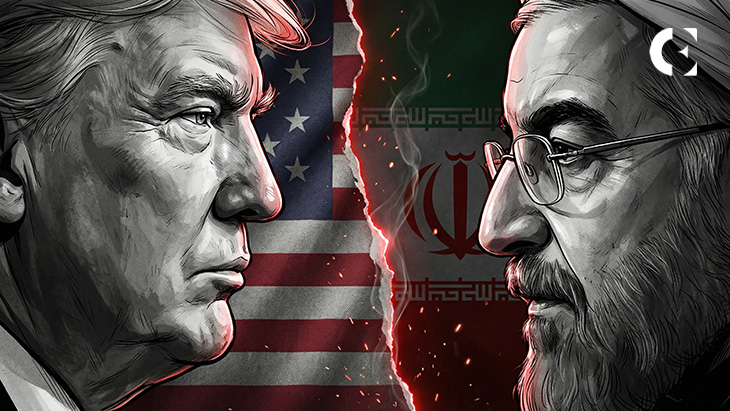

- Trump’s blockade strategy raises oil risk and boosts Bitcoin’s safe-haven appeal.
- Bitcoin holds $75K support as geopolitical tension fuels breakout potential.
- Iran standoff prolongs uncertainty, keeping crypto markets volatile.
U.S. President Donald Trump has shifted toward a prolonged economic confrontation with Iran, directing aides to prepare for an extended blockade that targets Tehran’s oil lifelines and financial reserves. The move reflects a strategic pivot after weeks of military pressure and stalled diplomacy.
However, it also signals a willingness to accept a drawn-out conflict with uncertain outcomes. Consequently, global markets and political observers now watch closely as Washington balances pressure with restraint.
Blockade Strategy Reshapes Conflict
Trump’s decision prioritizes sustained economic pressure over renewed airstrikes or abrupt disengagement. Officials indicate that the blockade aims to choke Iran’s exports and limit maritime access. Moreover, the administration believes this approach preserves leverage while avoiding immediate escalation.
Besides, internal debates continue within Washington. Some advisers support maintaining pressure to force nuclear concessions. Others warn that prolonged disruption in the Strait of Hormuz could damage global energy markets. Additionally, rising fuel costs already weigh on domestic political sentiment ahead of midterm elections.
Iran, meanwhile, appears prepared to endure economic strain. Analysts argue that Tehran calculates it can outlast U.S. pressure. Eric Brewer has noted that Iran sees little incentive to concede while it tests U.S. resolve. Hence, both sides remain locked in a strategic stalemate with no clear exit.
Diplomacy Stalls as Risks Grow
Negotiations have slowed despite early signals of renewed talks. Iran recently sought time to reassess its position before presenting updated proposals. However, skepticism remains high among regional mediators.
Significantly, Washington insists on strict limits to Iran’s nuclear program. Trump continues to demand long-term restrictions on enrichment activities. Conversely, Tehran resists what it views as excessive conditions. This gap has widened, delaying any meaningful breakthrough.
Moreover, risks of escalation persist. Iran could target regional energy infrastructure or challenge U.S. naval enforcement. Such actions would force Washington to choose between intensifying conflict and easing pressure. Consequently, the blockade strategy carries both economic and military uncertainties.
Bitcoin Signals Market Sensitivity
As geopolitical tensions rise, financial markets show mixed reactions. Bitcoin has climbed modestly, reflecting cautious investor sentiment. The asset trades near $76,000 after a slight daily gain. However, it still shows a weekly decline, indicating uncertainty.
According to Satoshi Flipper, Bitcoin’s short-term structure suggests a potential breakout. He identifies a falling wedge pattern forming on lower timeframes. Additionally, strong support sits near the $75,000 level, which buyers continue to defend.
A breakout above resistance near $78,000 could push prices toward $80,000. However, failure to hold support may trigger renewed downside pressure. Consequently, traders remain cautious as both geopolitical and technical factors shape market direction.
Related: META Drops Over 10% After Q1 Earnings as Market Cap Loss Tops $175B
Disclaimer: The information presented in this article is for informational and educational purposes only. The article does not constitute financial advice or advice of any kind. Coin Edition is not responsible for any losses incurred as a result of the utilization of content, products, or services mentioned. Readers are advised to exercise caution before taking any action related to the company.