

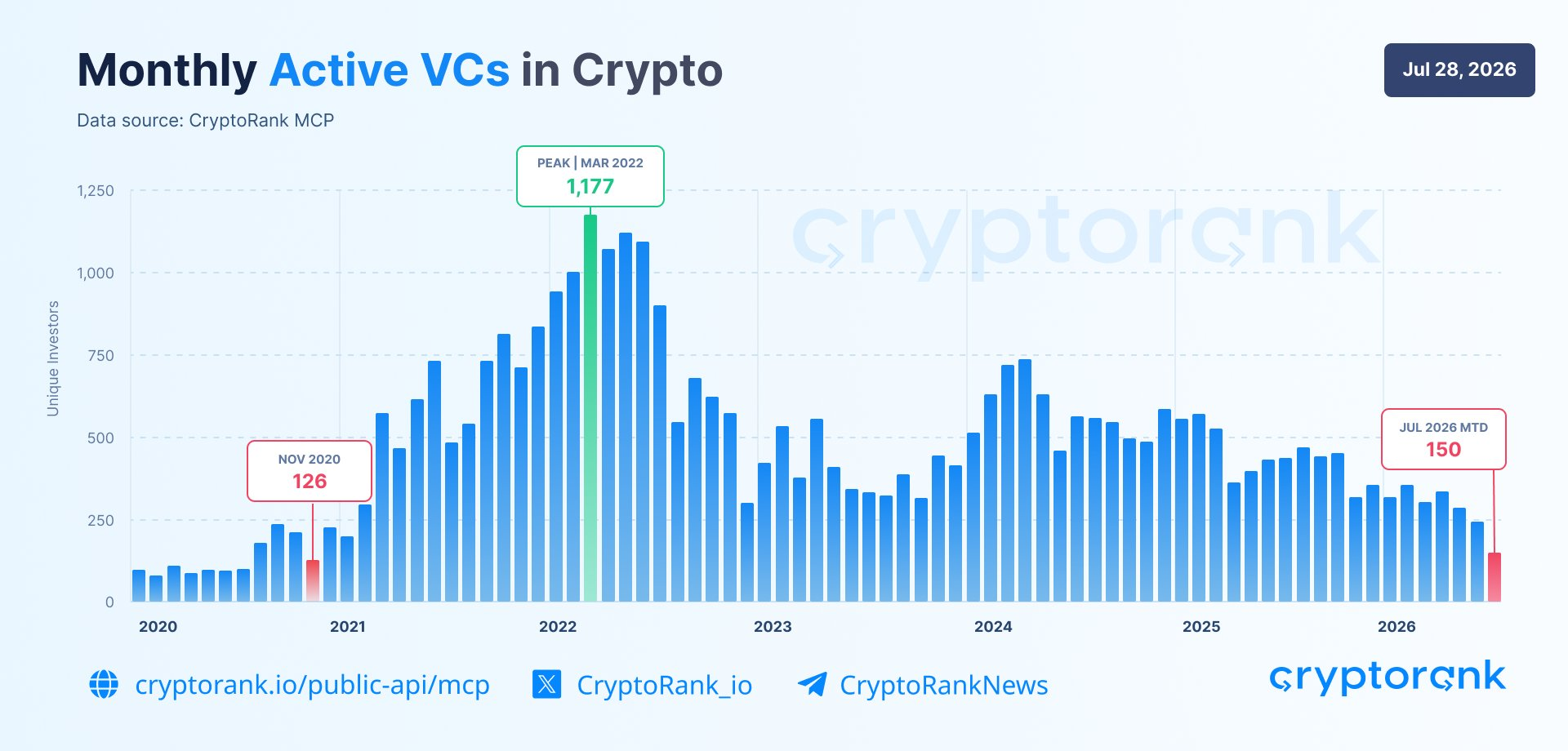
- Only 150 unique VC firms engaged in crypto funding rounds in July 2026.
- Severe regulatory tightening and other factors discourage VCs from investing in crypto.
- Fees generated on trading platforms have diminished significantly due to low volumes.
Crypto venture capital activity has dropped to its lowest level since November 2020, with only 150 unique VC firms participating in funding rounds in July 2026, according to CryptoRank. The latest release indicates that only 150 unique VC firms engaged in crypto funding rounds in July 2026, the lowest figure since November 2020.
This is far less than the recorded 1,177 active monthly investors at its peak in May 2022. The decline suggests that crypto venture investment is becoming increasingly concentrated as a smaller group of funds remains active and investors take a more selective approach toward new projects.
Factors Behind VCs’ Migration From Crypto
A few factors have been observed to underlie VCs’ reluctance toward cryptocurrency projects, including severe regulatory tightening, a structural shift in investor focus toward Artificial Intelligence (AI), and a market-wide correction that demands proven revenue over speculative hype. Notably, VCs have shifted their investment thesis from high-risk Web3 narratives to tangible software infrastructure.
The meteoric rise of generative artificial intelligence has fundamentally altered tech funding. Retail and institutional risk capital that previously flowed into crypto has largely migrated toward AI. VCs now choose to back AI startups that offer immediate productivity gains and enterprise software value over the long-term unproven promises of decentralized web ecosystems.
Strict Regulation and Low Revenue
On the other hand, the global surge in regulatory enforcement on the digital asset ecosystem has made the operational environment uncomfortable for VCs. Increased oversight on token distribution models makes classic VC exits via public token dumps legally hazardous. Also, severe regulatory friction, particularly in the United States, has forced VCs to pause early-stage investments for fear of future litigation or sudden policy changes.
It is worth noting that the fundamental mechanics of how crypto startups generate revenue and reward investors have faltered. Typically, VCs rely on fees generated via elevated trading volumes across trading platforms. The dynamics have changed, with volumes highly eroded, leaving the system unattractive for high-stakes investors.
The era of raising tens of millions of dollars on a whitepaper and a “Web3 hype” pitch deck is over. VCs now strictly prioritize startups showing proven user adoption, real transaction volumes, and practical, non-speculative business models.
Related: Crypto VCs Shift From Web3 to Stablecoins as $33T Volume Boom
Disclaimer: The information presented in this article is for informational and educational purposes only. The article does not constitute financial advice or advice of any kind. Coin Edition is not responsible for any losses incurred as a result of the utilization of content, products, or services mentioned. Readers are advised to exercise caution before taking any action related to the company.