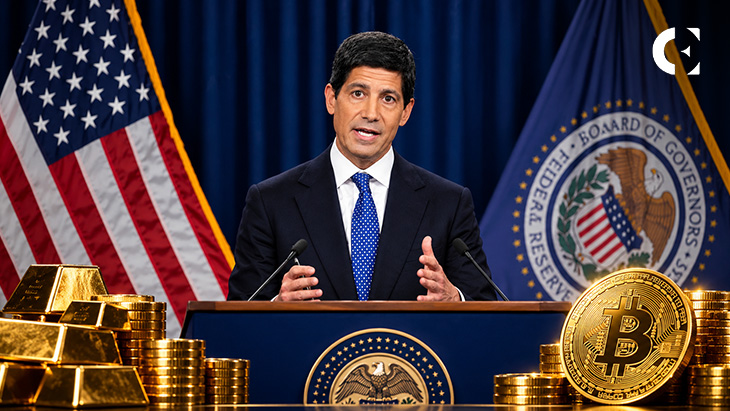

- The Fed faces a tough rate decision as weak job growth clashes with persistent inflation.
- Markets expect a pause in October, but hotter prices keep another rate hike in play.
- Bitcoin, gold and US stocks await Fed signals and fresh PCE inflation and GDP data.
The Federal Reserve faces a difficult policy decision as it prepares for its October 27–28 Federal Open Market Committee (FOMC) meeting.
Weakening US employment growth is colliding with inflation pressures that are forcing policymakers to balance slowing economic activity against the need to bring inflation back to its 2% target.
The Fed raised its benchmark interest rate by 25 basis points in September, bringing the federal funds target range to 3.75%–4.00%. However, October’s economic data have complicated the outlook. Weaker-than-expected payroll growth has raised concerns about the labor market, while hotter consumer and producer prices have reinforced the case for restrictive monetary policy.
Economists broadly expect the Fed to leave rates unchanged at this meeting. A Reuters poll published on October 20 found that nearly all surveyed economists anticipated a pause in October, followed by another rate increase in December. Bank of America remains a notable exception, forecasting another hike this month.
For Bitcoin, gold and US stocks, the decision will be significant. The Fed’s statement and Chair Kevin Warsh’s press conference will also hint at the next policy move.
US Weak Jobs Data and The Pressure on Fed
The September employment report, released on October 2, revealed the US labor market was losing momentum.
According to the Bureau of Labor Statistics, nonfarm payrolls increased by just 29,000, missing the 89,000 forecast. The unemployment rate rose to 4.2% from 4.1%, while average hourly earnings increased by 0.1% month over month, below the expected 0.3%.
Revisions further weakened the employment picture. August payroll growth was revised from 162,000 to 133,000, while July’s figure was revised from a gain of 21,000 to a loss of 10,000. Together, the revisions reduced previously reported job growth by 60,000.
The figures confirm a sharper slowdown in hiring than initially reported. Softer wage growth also points to easing inflationary pressure if the trend persists. For the Fed, weaker employment strengthens the argument against additional tightening, as higher borrowing costs further restrain business investment, household consumption and hiring.
One disappointing report does not establish that the economy is entering a recession.
Hot CPI and PPI Affect Interest Rate Outlook
US inflation accelerated in September, supporting the case for retaining restrictive monetary policy.
The Consumer Price Index (CPI), released on October 14, showed headline inflation rose 0.6% month over month and 3.7% year over year. Annual headline inflation exceeded the 3.6% forecast, while monthly inflation matched expectations.
Core CPI, which excludes food and energy, rose by 0.3% month over month, above the forecast of 0.2%. Its annual rate rose to 2.6%, up from 2.4% and above expectations of 2.5%.
Energy costs drove a substantial portion of the headline increase. Gasoline prices climbed 9.1% during September, accounting for more than half of the monthly CPI increase. Shelter costs also rose by 0.4%.
Producer prices delivered another inflation warning the following day. The Producer Price Index (PPI) for final demand increased by 1.3% month over month, compared with a forecast of 0.6%. Core PPI, excluding food and energy, rose by 0.7%, against expectations of 0.3%.
Persistent producer-price increases raise business costs and eventually feed into household prices. The combination of accelerating inflation and weakening hiring leaves policymakers with limited room to maneuver.
Another rate increase would reinforce the fight against inflation but add pressure to economic activity, while a pause would give officials more time to assess incoming data.
Will the Fed Hold Rates or Raise Them Again?
The October FOMC meeting will assess whether September’s rate increase provides sufficient control or whether steady inflation warrants another immediate move.
The baseline expectation is for the Fed to hold its benchmark rate at 3.75%–4.00%. PIMCO also expects a pause, while maintaining the prospect of further tightening later in the year.
Bank of America’s forecast for a 25-basis-point October increase highlights the division over the appropriate policy response.
A pause would not signal the end of rate increases. Policymakers would use the meeting to assess the effects of September’s hike and determine whether inflation is becoming more persistent.
Investors will scrutinize the statement for changes in the Fed’s assessment of inflation, employment and economic activity. The voting pattern will offer additional clues: dissent from officials favoring another increase would reveal the strength of inflation concerns despite the weakening labor market.
Why Bitcoin, Gold and Stocks Are Watching the Fed
Bitcoin and other risk assets generally benefit when investors anticipate stable or declining interest rates as lower expected borrowing costs ease financial conditions.
Recent market reactions illustrate how economic data generate different outcomes across asset classes.
Following the September employment report on October 2, Bitcoin traded above $87,000 before later moving toward $85,300 in the reported intraday snapshots. Gold also gained, while major US stock indices closed higher.
The reaction reversed after the CPI report. Bitcoin fell to around $81,900 in an early post-release snapshot, while gold declined and the Nasdaq Composite finished the session down 1.88%.
The October 15 PPI release produced a different outcome. Bitcoin briefly fell below $80,000 before recovering toward $81,000, while gold rose to $4,156.52 per ounce in a reported intraday snapshot. The Dow Jones Industrial Average, S&P 500 and Nasdaq Composite all closed higher that day.
The recovery coincided with lower Treasury yields and a weaker dollar, while stronger retail sales also influenced the session.
These moves show how markets adjust as investors reassess rate expectations and weigh economic data.
PCE Inflation and GDP Will Shape the Next Fed Decision
The October meeting precedes two important US economic releases scheduled for October 29: September PCE inflation and third-quarter GDP.
The PCE price index is the Fed’s preferred inflation gauge. The latest available August data showed headline PCE inflation at 3.4% year over year and core PCE inflation at 3.0%. An October 26 forecast snapshot listed expected monthly core PCE inflation of 0.3%, compared with 0.2% previously. Separately, Barron’s reported expectations for annual headline and core PCE inflation of 3.6% and 3.1%, respectively.
The advance GDP estimate is forecast to show annualized quarterly growth of 3.2% for the third quarter, compared with a revised 2.2% in the second quarter. These figures remain forecasts, not actual results.
Because both releases arrive after the October meeting, they will not affect the decision announced on October 28. They will, however, shape expectations for the December meeting.
The combination of inflation and growth data will influence market sentiment:
- Cooler inflation, resilient GDP: Easing price pressures and steady growth would support risk assets.
- Hotter inflation, strong GDP: Persistent inflation and robust demand would strengthen the case for restrictive policy or another rate hike.
- Cooler inflation, weak GDP: Lower rate expectations could support Bitcoin and stocks, while growth concerns weigh on sentiment.
- Hotter inflation, weaker GDP: Persistent inflation and slowing growth would complicate the Fed’s policy decisions.
What to Watch After the October FOMC Decision
The October 28 rate decision will be the main market focus. Investors will also examine the Fed’s statement and Warsh’s press conference for clues about future policy.
Three factors will be especially important:
- Treasury yields and the US dollar movements will show how markets adjust expectations for future interest rates.
- Real yields and risk appetite will help explain gold’s performance and whether Bitcoin and stocks benefit from easier financial conditions or face pressure from economic concerns.
- The October 29 PCE and GDP reports will provide updated evidence on inflation and economic growth ahead of the December meeting.
In sum, the Fed faces a balancing act between steady inflation and a weakening labor market. While markets widely expect a pause, the statement and press conference will shape expectations for future policy. The subsequent PCE and GDP reports will influence the December outlook and set the tone for Bitcoin, gold and US stocks heading into November.
Related: Bitcoin Faces Fed Decision, PCE Data and $11B Options Expiry
Disclaimer: The information presented in this article is for informational and educational purposes only. The article does not constitute financial advice or advice of any kind. Coin Edition is not responsible for any losses incurred as a result of the utilization of content, products, or services mentioned. Readers are advised to exercise caution before taking any action related to the company.