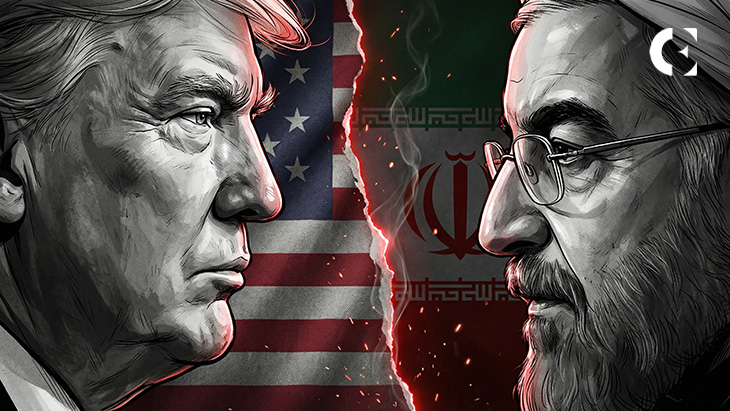

- Iran’s crypto holdings have grown to an estimated $7.7B since Trump-era sanctions intensified.
- US Treasury froze $500 million in Iran-linked crypto, including $344 million last month alone.
- Iran launched Bitcoin-backed shipping insurance for cargo ships transiting the Strait of Hormuz.
The Iranian government controls an estimated $7.7 billion in cryptocurrency, according to analysis from a threat detection data firm. The holdings have expanded since heavy sanctions were imposed during the first Trump administration, as Tehran increasingly turned to digital assets to move money outside the traditional banking system.
The US Treasury has already frozen nearly $500 million in Iran-linked crypto, including $344 million frozen last month alone. Treasury Secretary Scott Bessent confirmed the figures as the administration escalates its effort to trace and seize regime-connected digital assets.
Washington’s Leverage
According to Industry insiders, Washington holds significant leverage over Iran’s crypto operations through a specific threat: cutting crypto exchanges off from the American banking system. Exchanges that depend on US dollar on-ramps and off-ramps would face an impossible choice between maintaining Iranian business and retaining access to the world’s largest financial system.
The administration has already demonstrated a willingness to use that tool. The combination of on-chain tracing, account freezes, and banking system access restrictions gives US regulators a layered enforcement approach that Iran’s crypto infrastructure was not designed to withstand.
Bitcoin at the Strait of Hormuz
Iran has reportedly launched a new digital insurance platform for cargo ships operating through the Strait of Hormuz with payments settled entirely in Bitcoin. The structure is straightforward. Shipping companies pay insurance premiums in Bitcoin and receive clearance to transit the strait.
For Iran, the arrangement creates a fresh revenue stream outside dollar-denominated systems and extends its shadow economy into crypto infrastructure at one of the world’s most strategically sensitive waterways.
Bloomberg separately reported that the Islamic Revolutionary Guard Corps has moved approximately $3 billion through crypto channels, with Bitcoin-backed shipping insurance now operating live at the strait.
Why Crypto Is Actually Making Iran Easier to Track
The conventional assumption that cryptocurrency helps bad actors evade detection is being challenged by the very officials tasked with enforcing sanctions.
“We found over and over again that they are actually a much better asset for US law enforcement and other agencies to track because you leave a lot of breadcrumbs,” said Chris Perkins, CEO of 250 Digital Asset Management.
The transparency of public blockchains means every transaction leaves a permanent on-chain record that investigators can follow. USDT, the dollar-backed stablecoin issued by Tether, can be frozen when authorities identify regime-linked wallets. Bitcoin cannot be frozen in the same way, but its transaction history is fully visible and traceable.
Related: Inside Iran’s Hormuz Safe Bitcoin Gamble in Global Shipping
Disclaimer: The information presented in this article is for informational and educational purposes only. The article does not constitute financial advice or advice of any kind. Coin Edition is not responsible for any losses incurred as a result of the utilization of content, products, or services mentioned. Readers are advised to exercise caution before taking any action related to the company.