

- Headline U.S. CPI is forecast at 3.6%, while monthly core inflation may ease to 0.2%.
- Lower Treasury yields could support Bitcoin’s recovery toward $85,000, then $87,000.
- U.S. spot Ethereum ETFs lost $85.4M on October 12 as ETH faced $2,548–$2,578.
Bitcoin and Ethereum face a crucial test as Wednesday’s U.S. CPI report approaches, with headline inflation forecast at 3.6% despite expectations of softer underlying price pressures.
| Indicator | Reference |
| Headline CPI forecast | 3.6% annually; 0.6% monthly |
| Core CPI forecast | 2.5% annually; 0.2% monthly |
| Bitcoin reference price | $83,691 |
| Ethereum reference price | $2,514 |
Energy Prices Explain the Headline CPI Increase
September’s U.S. CPI report, scheduled for October 14 at 8:30 a.m. Eastern, presents contrasting inflation expectations. Economists forecast a 0.6% monthly increase in headline prices, up from August’s 0.4%. Consequently, annual inflation is projected to reach 3.6%, compared with 3.4% previously.
Much of the expected increase reflects higher energy costs. Gasoline prices climbed approximately 9% between August and September amid supply disruptions linked to the Iran war. However, gasoline is excluded from core CPI, making underlying inflation trends particularly important.
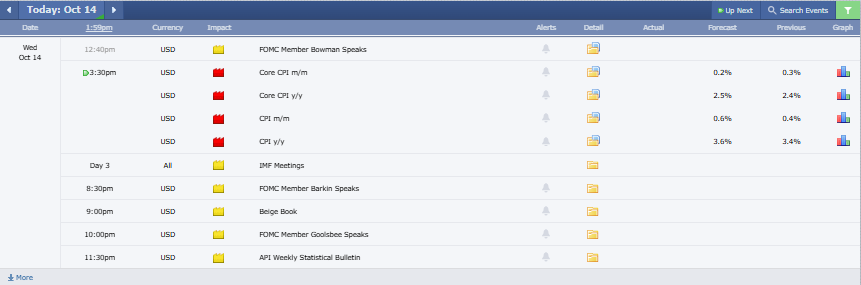
Meanwhile, economists expect monthly core inflation to slow to 0.2% from 0.3%, although the annual rate is projected to edge up to 2.5%. This slower monthly pace would suggest that broader price pressures remain more contained than the headline figure indicates.
Nevertheless, rising equipment costs associated with semiconductor demand present another inflation concern. Therefore, policymakers will examine whether price increases remain concentrated in energy or spread across other goods and services.
How Treasury Yields Could Shape the Bitcoin and Ethereum Recovery
Bond traders will decide whether energy inflation signals broader price pressures. The two-year Treasury yield closely reflects expected Federal Reserve decisions, while the 10-year yield incorporates longer-term inflation and financing risks.
Ahead of the CPI release, the 10-year Treasury yield hovered near 5.2%, while its inflation-adjusted counterpart reached 2.91% on October 9. Such returns increase the opportunity cost of holding non-yielding crypto assets, particularly when funding remains expensive.
Meanwhile, the Federal Reserve raised its policy rate range to 3.75%–4.00% in September. Markets largely expect unchanged rates on October 27–28, making underlying inflation particularly important for subsequent policy decisions.
However, monthly core inflation of 0.2% already matches expectations. Therefore, a stronger recovery signal would require softer underlying inflation alongside declining Treasury yields, a weaker dollar, and renewed spot buying.
Bitcoin Targets $85,000–$87,000 as Ethereum Faces $2,578 Hurdle
Bitcoin approached the release near $83,691, below resistance from $84,000 to $84,500. Bitfinex places the average entry price of U.S. spot Bitcoin ETF investors near $84,340. That breakeven zone could attract selling from holders seeking to exit without losses.
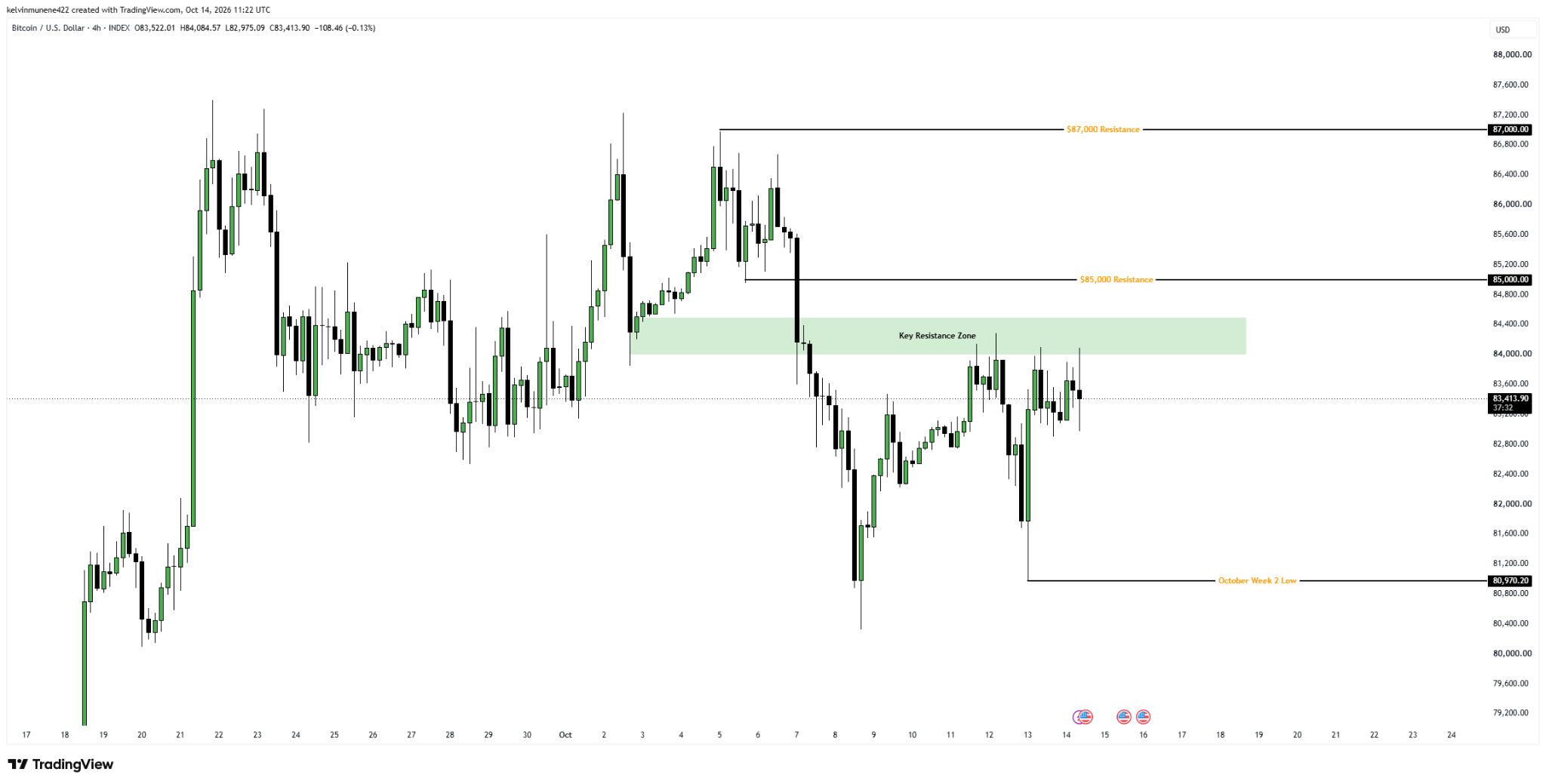
If buying absorbs this supply while yields retreat, the next reference points are $85,000 and $87,000. Bitfinex identifies concentrated short positioning between $86,500 and $87,300, potentially intensifying price movement if resistance breaks.
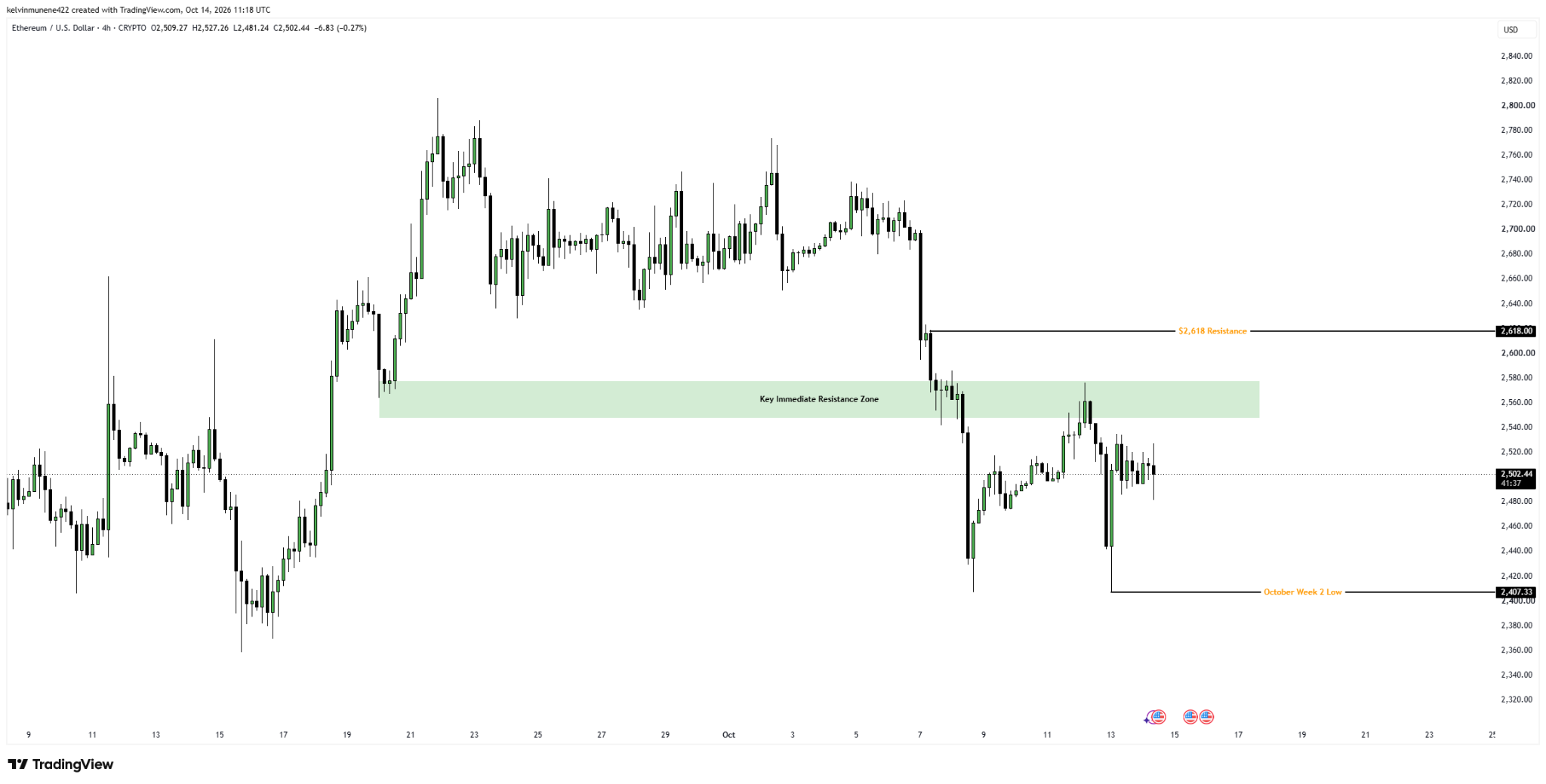
However, a sustained advance still requires spot purchases and improved ETF flows. Ethereum, trading around $2,514, faces its own test at $2,548–$2,578, followed by $2,618. Four-hour momentum has improved, although the daily trend remains weak.
U.S. spot Ethereum ETFs recorded $85.4 million in outflows on October 12, according to Farside Investors. The following session recorded $16.7 million in inflows, highlighting uneven institutional demand.
Key BTC and ETH Support Levels if Core CPI Runs Hot
| Price level | Market significance |
| $84,000–$84,500 | Immediate Bitcoin resistance surrounding the estimated ETF investor breakeven level |
| $85,000 / $87,000 | Initial and secondary Bitcoin upside references following confirmation |
| $2,548–$2,578 | Ethereum recovery barrier, followed by resistance around $2,618 |
| $81,300 / $2,449 | Bitcoin and Ethereum support references if rebounds fail. |
Expansion Case
Core inflation at or below forecasts, alongside falling two-year and real yields, would provide stronger support for sustained spot buying.
Failure Case
Hotter core inflation or rising real yields would threaten recoveries, while renewed ETF outflows would make either breakout harder to sustain.
Bottom Line
Overall, the test is whether bond markets treat higher headline inflation as an energy shock instead of lasting broad-based price acceleration.
FAQs
Softer core inflation and falling Treasury yields could improve risk appetite, supporting Bitcoin despite higher energy-driven headline inflation.
Monthly core inflation at or below the 0.2% forecast could support recovery if Treasury yields decline and buying strengthens.
Bitcoin must overcome $84,000–$84,500 resistance before testing $85,000 and potentially $87,000, provided buying pressure strengthens.
Ethereum needs a sustained breakout above $2,548–$2,578, supported by stronger spot demand, before challenging resistance near $2,618.
Related: US CPI Report Today: What It Means for Bitcoin, Ethereum, XRP and Cardano Prices
Disclaimer: The information presented in this article is for informational and educational purposes only. The article does not constitute financial advice or advice of any kind. Coin Edition is not responsible for any losses incurred as a result of the utilization of content, products, or services mentioned. Readers are advised to exercise caution before taking any action related to the company.