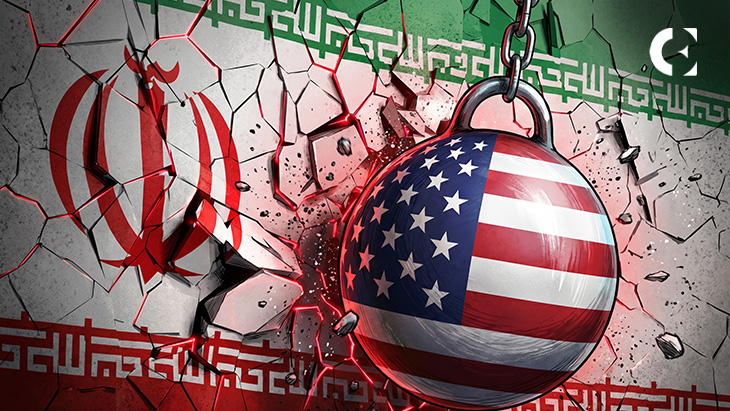

- U.S. Treasury seized nearly $500M in Iran-linked crypto under Operation Economic Fury.
- OFAC froze $344M in USDT tied to Iran-linked wallets and sanctioned crypto addresses.
- Blockchain firms linked the wallets to large USDT flows, the IRGC-Qods Force, and Hezbollah.
The United States has seized about $500 million in Iran-linked cryptocurrency assets, Treasury Secretary Scott Bessent said, marking a major sanctions action against Tehran’s digital finance networks. The seizure forms part of ‘Operation Economic Fury,’ a Treasury campaign targeting digital asset channels that officials say help move funds outside traditional banking systems.
Bessent said the operation is aimed at disrupting financial routes allegedly used to support military activity and regional proxies. He added that Treasury would continue to “follow the money” as it expands pressure on Tehran’s external funding networks.
Crypto Wallets Enter Sanctions
The latest figure builds on an April 24 Treasury action, when the Office of Foreign Assets Control (OFAC) sanctioned multiple wallets tied to Iran and froze $344 million in cryptocurrency. Bessent disclosed the freeze on X, stating that the wallets were linked to Iran-related financial activity.
The sanctions targeted digital asset wallets and were accompanied by broader measures against Iran-related oil and financial networks. The State Department argued the actions were aimed at cutting revenue streams that Washington links to destabilizing activity across the Middle East.
Blockchain intelligence firms later added more detail to the case. TRM Labs reported that two wallets attributed to Iran’s central bank held about $344.2 million in large USDT balances.
The firm said the wallets had links to the IRGC-Qods Force and Hezbollah. It also reported that the wallets received roughly $370 million across nearly 1,000 transactions since March 2021.
Crypto Seizures Signal a Shift in Sanctions Strategy
Chainalysis also reported that OFAC updated its designation of the Central Bank of Iran by adding new crypto addresses to the sanctions list. The firm said the action followed an enforcement effort involving Tether and U.S. authorities, which froze $344 million in USDT tied to listed addresses.
Iran, however, has rejected the pressure campaign, arguing that sanctions and financial restrictions raise global oil prices. Washington, on the other hand, says the measures target funding channels linked to terrorism, weapons programs, and regional destabilization.
The case highlights how sanctions enforcement has moved beyond banks, oil shipments, and shell companies. Stablecoins and blockchain wallets are now part of the financial map reviewed by regulators and intelligence firms.
For crypto markets, the seizure shows how centralized issuers and blockchain analytics can help authorities freeze assets. For Tehran, nevertheless, the loss removes hundreds of millions in dollar-linked liquidity.
Related: Iran’s New Proposal Tests US Red Lines on Hormuz and Nuclear Talks
Disclaimer: The information presented in this article is for informational and educational purposes only. The article does not constitute financial advice or advice of any kind. Coin Edition is not responsible for any losses incurred as a result of the utilization of content, products, or services mentioned. Readers are advised to exercise caution before taking any action related to the company.