

- Bitcoin remains nearly 50% below its peak, even as analysts argue long-term market trends favor recovery.
- Analyst Charlie Bilello says bull markets have historically lasted about five times longer than bear markets.
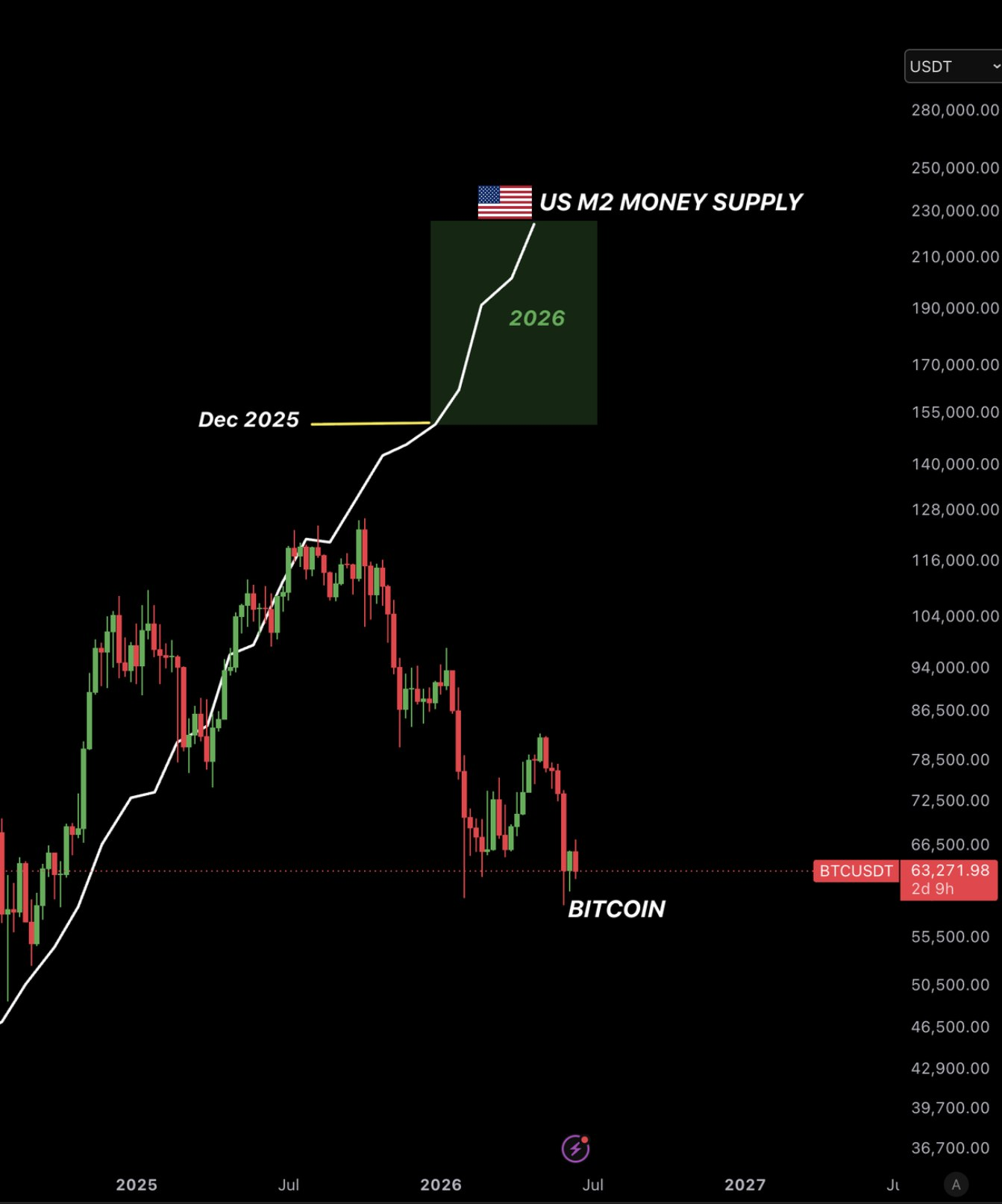
- Rising U.S. liquidity and record stock market highs are fueling speculation of a Bitcoin catch-up rally.
The U.S. stock market continues to hit new highs despite geopolitical tensions and persistent inflation concerns. Some market analysts argue that history favors long periods of growth, with bull markets lasting far longer than downturns.
The trend has also fueled speculation that beaten-down assets like Bitcoin could eventually benefit from a shift in investor capital.
Bull Markets Have a Strong Historical Edge
Market analyst and financial commentator Charlie Bilello noted that bull markets have historically lasted about five times longer than bear markets.
According to Bilello, the average bull market has delivered gains of 254% over roughly five years. By comparison, bear markets have produced average declines of 31% and typically lasted about one year.
Source: X
He also pointed to the strength of the broader economy. The current U.S. economic expansion has now lasted 71 months since the COVID-19 recession in 2020. That is longer than the post-World War II average of about 67 months.
Looking at data dating back to 1949, Bilello said another bear market is inevitable. However, he believes the next bull market will likely be stronger and last longer than the downturn that comes before it.
He added that one of the biggest risks for investors is disrupting the benefits of long-term compounding.
Russell 2000 and Dow Hit Record Weekly Closes
Market commentary account Bull Theory highlighted another sign of strength in equities. Both the Russell 2000 Index and the Dow Jones Industrial Average recently recorded their highest weekly closes on record.
The gains came despite ongoing tensions involving Iran, interest-rate hikes from the Bank of Japan, and stubbornly high U.S. inflation.
Since bottoming on March 31, the Russell 2000 has climbed 24%, adding about $640 billion in market value. During the same period, the Dow Jones has risen 15%, increasing the combined value of its 30 components by an estimated $2 trillion.
Bull Theory said small-cap stocks have benefited because nearly 40% of debt held by Russell 2000 companies carries floating interest rates. In contrast, less than 10% of debt among S&P 500 companies is tied to floating rates.
As interest-rate expectations change, borrowing costs for small-cap firms adjust more quickly. That makes them especially sensitive to shifts in monetary policy.
The account also drew comparisons to the late-1990s rally, when the Nasdaq Composite surged from around 1,800 to nearly 4,800 in just 15 months before reaching its peak.
Rising Money Supply Fuels Bitcoin Optimism
Crypto analyst Ash Crypto pointed to another possible catalyst for digital assets. He noted that the U.S. money supply recently reached a record $22.8 trillion after expanding by more than $400 billion in 2026.
According to the analyst, much of the new liquidity has flowed into stocks so far. However, he believes Bitcoin could eventually benefit as well, especially as the United States remains a leader in spot Bitcoin ETF inflows and crypto-focused policy initiatives.
Source: X
Ash Crypto argued that capital often rotates from assets viewed as overvalued into those seen as undervalued. With Bitcoin still trading nearly 50% below its October peak, he believes the cryptocurrency could be positioned for a strong catch-up rally if such a rotation takes place.
Bitcoin Remains Deep Below Its Highs
According to CoinMarketCap data, Bitcoin is trading at $63,478, up 1.41% over the past 24 hours. Despite the recent gain, the cryptocurrency remains down 31% year-to-date and nearly 50% below its peak.
The broader crypto market has also struggled. Total cryptocurrency market capitalization currently stands at about $2.2 trillion, well below the $4.2 trillion peak reached last year.
Investor sentiment remains weak. The Crypto Fear and Greed Index is at 21, after falling as low as 8 earlier in the downturn.
Even so, many market commentators argue that history remains on the side of long-term recoveries. Bull markets have typically lasted much longer and generated significantly larger gains than the bear markets that interrupted them.
Related: Bitcoin Trades Above 200-Week MA That Historically Delivered 113% Returns
Disclaimer: The information presented in this article is for informational and educational purposes only. The article does not constitute financial advice or advice of any kind. Coin Edition is not responsible for any losses incurred as a result of the utilization of content, products, or services mentioned. Readers are advised to exercise caution before taking any action related to the company.