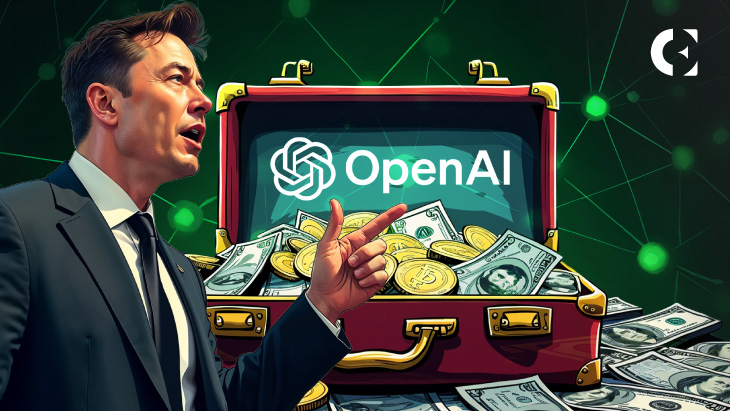

- California jury rejected Musk’s OpenAI lawsuit after finding the case was filed too late.
- Jurors found OpenAI, Altman, and Brockman not liable while rejecting Microsoft’s claim.
- Musk sought to reverse OpenAI’s restructuring and recover alleged gains from the firm.
A California jury rejected Elon Musk’s lawsuit against OpenAI, CEO Sam Altman, and co-founder Greg Brockman after finding that the claims were filed too late. The decision removed a major legal challenge facing the ChatGPT maker.
According to NBC News, Musk’s case sought $150 billion from OpenAI and its leaders. Jurors found OpenAI, Altman, and Brockman not liable on all claims while also rejecting a separate claim against Microsoft.
OpenAI Lawsuit Dismissed as Untimely
According to reports, Musk sought up to $150 billion in damages from OpenAI and Microsoft. Jurors found OpenAI, Altman, and Brockman not liable on all claims while also rejecting the claim against Microsoft.
U.S. District Judge Yvonne Gonzalez Rogers accepted the advisory jury’s determination. She said there was substantial evidence supporting the jury’s finding after the three-week trial in Oakland, California.
The jury concluded that Musk missed the legal deadline to sue. It found that he had three years to bring the claims but did not file the case within that period.
Steven Molo, Musk’s lawyer, reserved his client’s right to appeal. The verdict still marked a significant setback for Musk’s legal campaign against the AI company he helped create.
Musk filed the OpenAI lawsuit in 2024. He accused Altman and OpenAI of violating a commitment to keep the artificial intelligence lab tied to its nonprofit mission.
OpenAI was founded in 2015 with Musk among its early backers. He left the board three years later, before the company expanded its commercial partnerships and for-profit structure.
Musk Sought to Reverse OpenAI Restructuring
Microsoft became part of the case because of its investment in OpenAI, which began as early as 2019. Musk argued that the company aided an alleged breach of charitable trust.
His legal team sought major financial and corporate remedies. They asked the court to force OpenAI and Microsoft to give up as much as $134 billion in alleged “ill-gotten gains.”
The lawsuit also targeted OpenAI’s 2025 restructuring. Musk’s lawyers wanted the court to unwind the changes and remove Altman and Brockman from leadership roles.
Musk said any recovered money should return to “the OpenAI charity,” rather than to him personally. His argument centered on the claim that OpenAI executives had abandoned the group’s founding charitable purpose.
During testimony, Musk said he donated roughly $38 million to OpenAI. He said the money was given with the understanding that AI would be developed for the benefit of humanity.
OpenAI’s lawyers disputed that claim and said the donations carried no restrictions. They also argued that restructuring was necessary to compete in a costly AI race against Google DeepMind.
The defense showed that Musk had discussed a for-profit structure if he retained control. Lawyers also said he once pushed for OpenAI to be folded into Tesla.
OpenAI’s team framed the case as an effort to weaken a rival after Musk failed to gain control. Musk started xAI in 2023, and the provided report said xAI is now part of SpaceX.
Related: Tokenized RWA Market Cap Climbs to Record $33.7B as Treasury Demand Accelerates
Disclaimer: The information presented in this article is for informational and educational purposes only. The article does not constitute financial advice or advice of any kind. Coin Edition is not responsible for any losses incurred as a result of the utilization of content, products, or services mentioned. Readers are advised to exercise caution before taking any action related to the company.