

- AVAT fell 38% on its Nasdaq debut as weak AVAX prices and SPAC selling hit investor sentiment hard.
- Analysts say the drop fits a common crypto treasury stock pattern: big swings during weak crypto markets.
- AVAT aims to be more than an AVAX holder, but investors want proof that its strategy can create value.
Avalanche Treasury Co. (NASDAQ: AVAT) finally began trading on Nasdaq on June 11. However, instead of a strong debut, the stock suffered a steep selloff.
Shares closed down 38.1% at $1.85 on their first day. The fall sparked unease about investor confidence and the outlook for crypto treasury companies.
While the drop was alarming, AVAT’s performance was a pattern familiar with crypto treasury stocks during weak market conditions.
What Is Avalanche Treasury Co.?
Avalanche Treasury Co. is a public company that gives investors exposure to the Avalanche ecosystem and its native token, AVAX, through the stock market.
It launched with $460 million in treasury assets and secured an exclusive arrangement with the Avalanche Foundation.
Unlike a passive investment vehicle that just holds tokens, Avalanche Treasury Co. will be deploying capital across the ecosystem. Its strategy includes staking, validator operations, ecosystem investments, and treasury management initiatives.
Chief Executive Officer Bart Smith has described the company as more than a vehicle for AVAX exposure. According to Smith, it represents a broader investment in the future of institutional finance on Avalanche.
The company went public through a SPAC merger with Mountain Lake Acquisition Corp. (MLAC). The deal was valued at approximately $675 million. Trading officially began under the AVAT ticker on June 11.
Why Did AVAT Drop 38% on Its First Day?
Several factors contributed to the weak debut.
Weak AVAX Performance
The greatest issue is the current state of the Avalanche ecosystem and the AVAX token itself.
AVAX was trading near $6.64 on June 12. The token was down 7% over the past week and about 33% over the past month. It also remains more than 95% below its all-time high of $144.96 reached in November 2021.
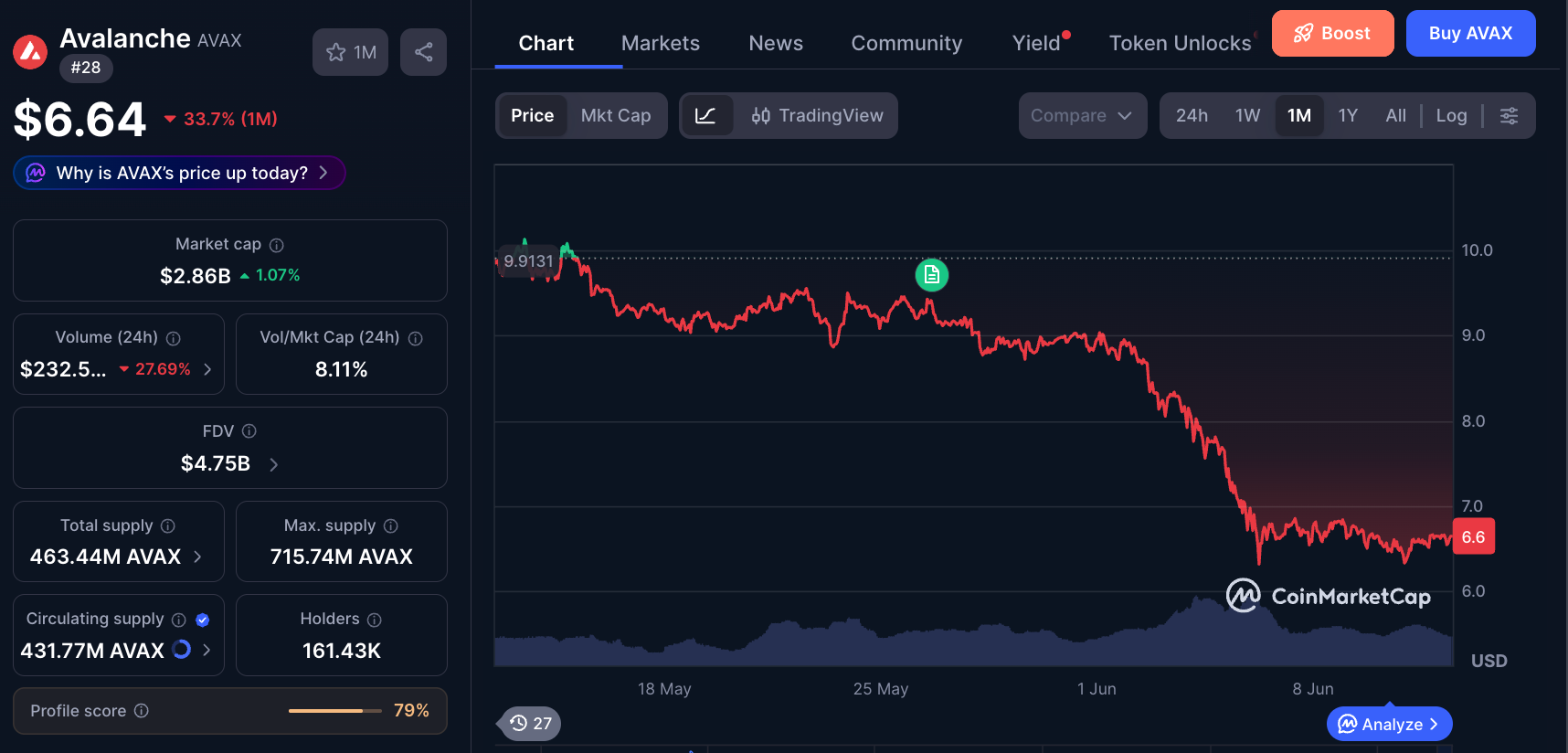
For many investors, buying AVAT is ultimately a bet on Avalanche. With AVAX trading near multi-year lows, enthusiasm for Avalanche-related investments remains limited.
SPAC-Related Selling Pressure
The SPAC structure may have added further pressure.
SPAC investors can redeem their shares before a merger closes. Those who choose not to redeem often sell shortly after trading begins. This creates selling pressure during the stock’s first few sessions.
“Buy the Rumor, Sell the News”
Some traders may also have used the Nasdaq listing as a profit-taking event.
The public listing had been anticipated for months. Investors who bought ahead of the merger may have sold once trading started, following a classic “buy the rumor, sell the news” strategy.
Poor Timing for a New Crypto Treasury Stock
Market conditions may have been AVAT’s biggest obstacle.
The broader digital asset treasury sector has cooled considerably in recent months. Weekly Bitcoin inflows into treasury companies have reportedly dropped to around $266 million. Earlier this year, those inflows exceeded $2 billion per week.
At the same time, altcoins have continued to struggle. As a result, investors have become more selective and increasingly demand proof that treasury companies can create value beyond simply holding digital assets.
That creates a difficult backdrop for Avalanche Treasury Co., which launched during one of AVAX’s weakest periods in years.
Why Did Avalanche Treasury Co. Go Public?
The listing was designed to bridge traditional finance and the Avalanche ecosystem.
Many institutional investors cannot directly hold cryptos due to regulatory and operational restrictions. AVAT provides investors with a regulated way to gain exposure to Avalanche without handling wallets, custody solutions, or direct token purchases.
The public listing also provides easier access to capital markets. If investor demand grows, the company could raise additional funds to expand its treasury and increase investments across the Avalanche network.
At launch, management said the stock offered exposure to Avalanche at roughly 0.77 times net asset value. That implied a discount of about 23% compared with buying AVAX directly or through alternative investment vehicles.
Is This Kind of Volatility Normal?
In many ways, yes.
Crypto treasury stocks amplify gains and losses relative to the assets they hold. During bull markets, investors push these stocks to premiums above the value of their crypto holdings. They do so hoping for future treasury upside, capital raises, and ecosystem expansion.
During bearish periods, those premiums disappear and turn into steep discounts. As a result, treasury stocks usually experience larger price moves than the crypto they hold.
Several high-profile examples have followed a similar pattern. Bitcoin treasury giant Strategy has endured dips during the crypto bear market.
Ethereum treasury firm Bitmine Immersion Technologies soared after adopting an ETH treasury strategy in 2025, only to later fall about 88% from its peak. Solana treasury company SOL Strategies has also posted huge losses over the past year.
The pattern is familiar. Initial excitement drives shares higher, but weak crypto markets eventually weigh on both the underlying asset and the stock.
The Bigger Challenge for AVAT
The market’s reaction does not necessarily mean Avalanche Treasury Co.’s business model has issues. Instead, investors are unconvinced that the company can differentiate itself from other digital asset treasury firms.
Management argues that AVAT is more than an AVAX holding vehicle. The company plans to deploy capital across the Avalanche ecosystem and participate in network growth.
But, investors may want proof that this strategy can generate meaningful returns before assigning a premium valuation to the stock.
At the moment, the first trading session delivered a clear message. Institutional exposure to Avalanche is appealing in theory, but investors are cautious about crypto treasury companies launching at a time when altcoins and market sentiment remain under pressure.
Disclaimer: The information presented in this article is for informational and educational purposes only. The article does not constitute financial advice or advice of any kind. Coin Edition is not responsible for any losses incurred as a result of the utilization of content, products, or services mentioned. Readers are advised to exercise caution before taking any action related to the company.