

- Bitcoin’s 22% declined from its May high, but analysts say true market capitulation is still missing.
- On-chain data shows rising stress as capital exits Bitcoin, yet panic levels remain below historic bottoms.
- Miner pressure, exchange inflows, and weak demand signals suggest Bitcoin may face more volatility ahead.
Bitcoin’s decline deepened concerns across the crypto market after more than $12 billion left the network, the token fell 22% from its May high, and investors locked in losses for 25 straight days. Yet one on-chain analyst says the selloff has not reached the kind of panic that has historically marked major market bottoms.
CryptoQuant’s Axel Adler Jr argued in a post on X that the current downturn looks more like a prolonged correction than full capitulation. “BTC: this is still not capitulation,” he wrote, pointing to a range of indicators that show stress is building but not yet extreme.
In plain terms, traders are under pressure, but the market has not seen the widespread fear and forced selling that often signal a durable bottom. That suggests Bitcoin could face further weakness before prices stabilize.
On-Chain Metrics Show Growing Market Stress
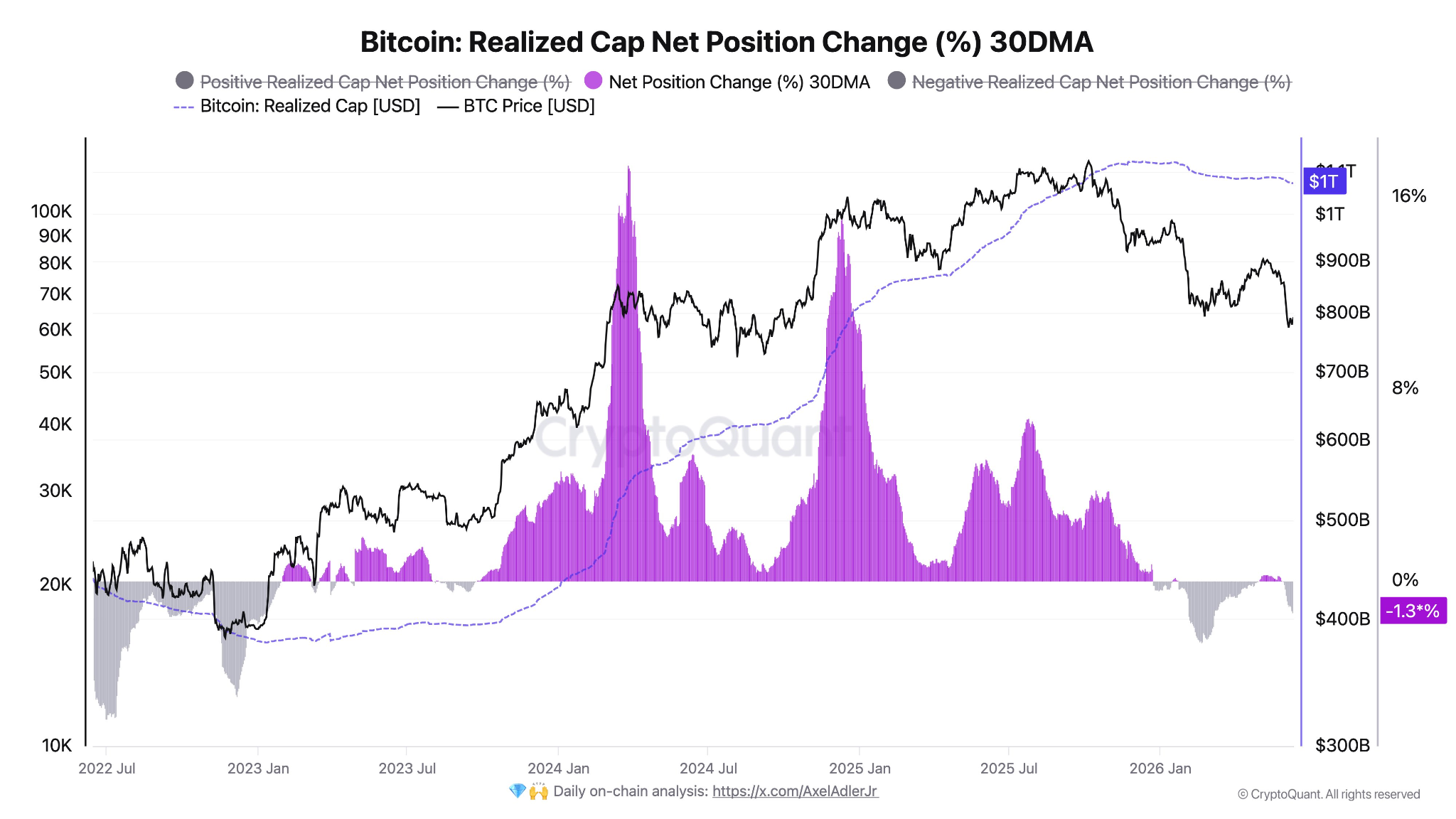
Adler pointed to Bitcoin’s Realized Cap Net Position Change, which recently turned negative after months of strong accumulation. The indicator now sits near -1.3%, suggesting capital continues leaving the network rather than entering it.
Moreover, the analyst highlighted Bitcoin’s MVRV Z-Score, which has cooled significantly. He noted that the metric currently stands at 0.32, far below its average reading of 1.71. While the decline removed signs of overheating, it has not reached the deeply distressed levels seen during previous bear market bottoms.
However, he stressed that extreme panic remains absent. According to Adler, multiple independent indicators now tell the same story. “The signal is not coming from one indicator, but from five independent metrics at once.”
Exchange Flows and Miners Raise Red Flags
Besides weakening valuation metrics, exchange activity also reflects growing pressure. Adler reported net inflows of roughly 91,000 BTC to exchanges, while stablecoin balances declined by about $119 million.
“The mechanism is simple,” he explained. “BTC moves onto exchanges – supply rises. Stablecoins leave exchanges – demand falls.”
Additionally, Bitcoin’s recent rebound from the $60,000 region has not convinced the analyst. He argued that short covering drove the recovery rather than fresh leveraged demand. Open interest declined while prices moved higher, suggesting traders closed positions instead of opening new bullish bets.
Miner data also paints a troubling picture. The Bitcoin Price-to-Miner-Revenue Multiple has fallen from 160 to 80, indicating weaker mining economics. Furthermore, Bitcoin trades roughly 21% below its Difficulty Bottom level.
Adler warned that miner stress could intensify if conditions worsen. “If Puell drops below 0.50 and BTC breaks below $55K, forced miner selling will begin.”
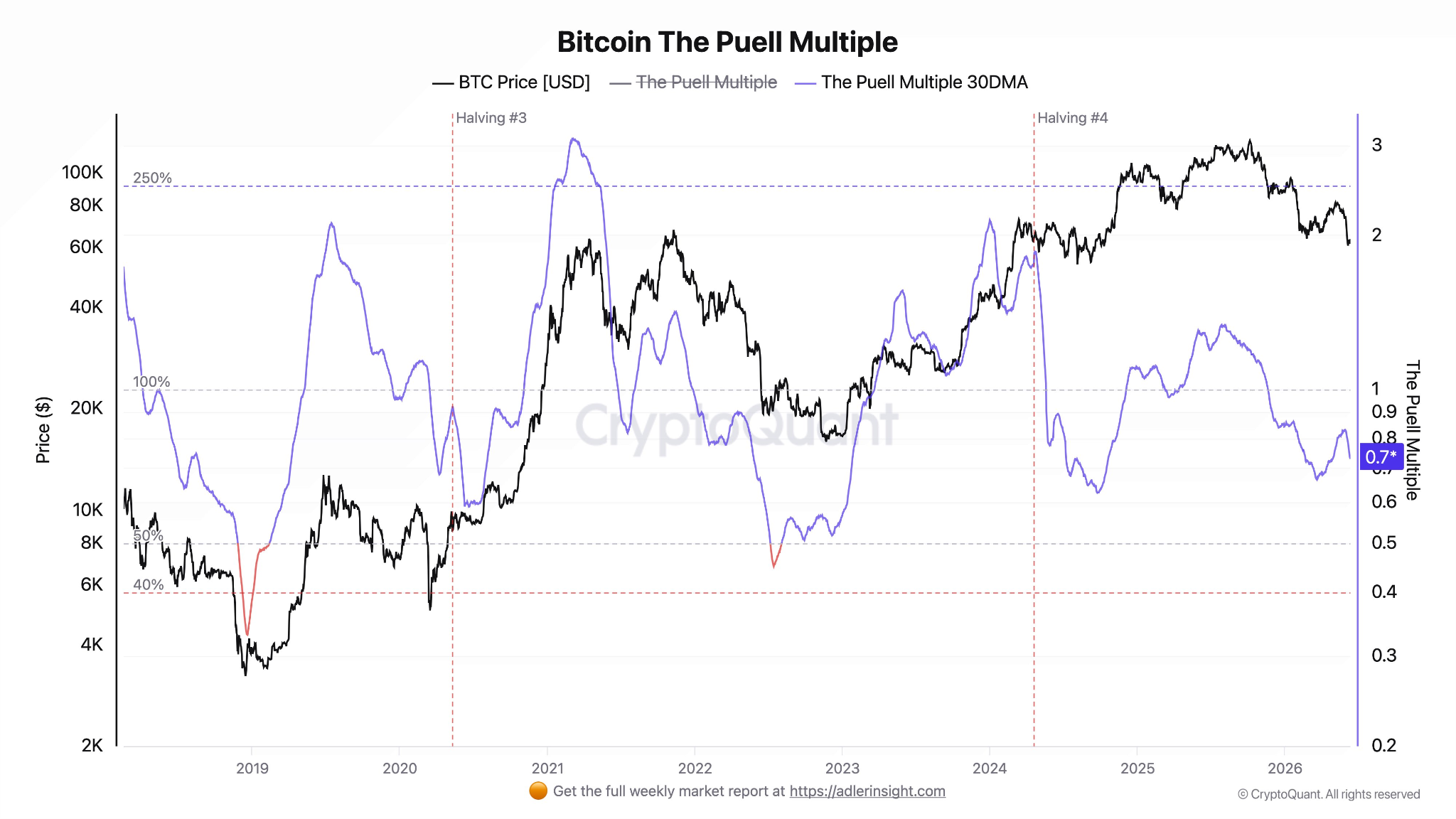
Historically, such conditions helped form major market bottoms in 2018 and 2022. Hence, Adler believes the coming weeks may determine whether Bitcoin has already found support or still faces another significant leg lower.
Related: Bitcoin Touches 50-Month MA Again, Analyst Sees Bottom Signal
Disclaimer: The information presented in this article is for informational and educational purposes only. The article does not constitute financial advice or advice of any kind. Coin Edition is not responsible for any losses incurred as a result of the utilization of content, products, or services mentioned. Readers are advised to exercise caution before taking any action related to the company.