

- CZ says IPOs will move on-chain as tokenized stocks gain traction.
- On-chain shares will offer 24/7 trading, fractional access, and faster settlement.
- Securities laws still apply, while liquidity and investor rights remain key hurdles.
Binance founder Changpeng Zhao (CZ) says the future of stock listings may not stay on Wall Street. In a post on X, he said, “IPOs will move on chain”. CZ’s comment comes as on-chain IPOs already run on live, regulated infrastructure.
What “On-Chain” Means for IPOs
An IPO, or Initial Public Offering, is when a company first sells shares to the public. Normally, this happens through banks, exchanges, and paperwork-heavy processes. “On-chain” means using blockchain technology instead. So shares become digital tokens that can be tracked, traded, and settled automatically.
Three things change for investors, and one doesn’t. First, access.
A tokenized offering can open to retail buyers on day one, while traditional allocations still run through institutions and accredited clients. That means regular investors get in early instead of waiting for the shares to hit public markets.
Second, timing. Tokenized venues quote around the clock, so a listing no longer waits for an opening bell. Trading wouldn’t be limited to weekday market hours anymore.
Third, size. Shares divide natively into small fractions, so investors buy tiny slices of expensive stock instead of needing to afford a full share.
Costs could drop too. Underwriters, lawyers, and auditors currently take a cut of every traditional listing, and automation removes part of that chain.
What Doesn’t Change
Tokenizing a stock doesn’t get around securities law. In January, the SEC said that tokenizing a share leaves registration and disclosure duties intact. In other words, a company still has to follow the same rules about reporting its finances and registering the offering. Just because it’s on a blockchain doesn’t make those requirements disappear.
There’s also a question of what investors actually own. Some tokenized products only track a share’s price without giving the holder real shareholder rights, like voting power. That distinction matters, and it depends on the fine print of each specific product.
Signs the Shift Is Already Starting
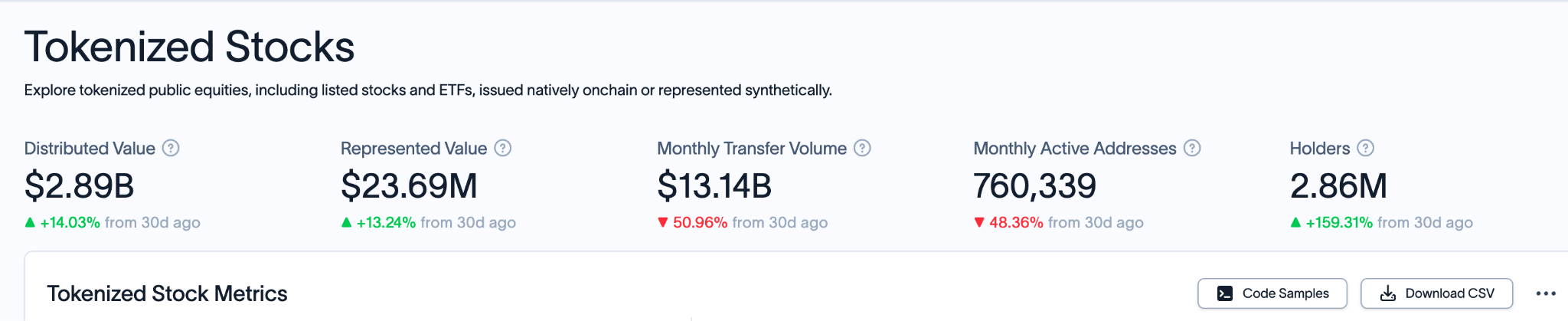
Tokenized stocks now hold about $2.9 billion in on-chain value, according to data tracker rwa.xyz, up roughly 14% in the past month. Research firm Grayscale names BNB Chain among the leading chains for tokenized stocks.
Traditional finance is moving too. The New York Stock Exchange filed a rule in April that took effect immediately, allowing tokenized versions of large-cap stocks to trade alongside conventional shares, with settlement happening the next day. That’s faster than the standard multi-day settlement process, though not the instant settlement some crypto advocates imagine.
The Open Question: Liquidity
Even with round-the-clock trading, a tokenized listing needs enough buyers and sellers to function properly. A tokenized listing can trade around the clock, yet thin order books still pose a risk, meaning a market that’s technically always open doesn’t guarantee there’s always someone on the other side of your trade.
Ultimately, CZ’s idea is already taking shape. Regulators still haven’t approved large-scale on-chain IPOs, and legal questions around ownership remain. But the NYSE’s new rule, Europe’s pilot IPO, and billions already invested in tokenized stocks suggest that the shift is already underway.
Related: CZ Says Tokenization Could Bring 24/7 Global Markets On-Chain: What Traders Should Watch
Disclaimer: The information presented in this article is for informational and educational purposes only. The article does not constitute financial advice or advice of any kind. Coin Edition is not responsible for any losses incurred as a result of the utilization of content, products, or services mentioned. Readers are advised to exercise caution before taking any action related to the company.