

- Japan’s 30-year bond yield hit a record of around 4.2%, raising new concerns about fiscal stability.
- JGB yields surged as oil prices, inflation fears, and fresh borrowing risks hit investor demand.
- Rising Japanese yields may pressure yen markets, global liquidity, and risk assets, including crypto.
Japan’s bond market is sending a warning across global markets as long-dated government debt faces one of its sharpest selloffs in decades. The 30-year Japanese government bond (JGB) yield reached a record of around 4.2% on May 18, while the 10-year yield climbed to 2.8%, its highest level since 1996.
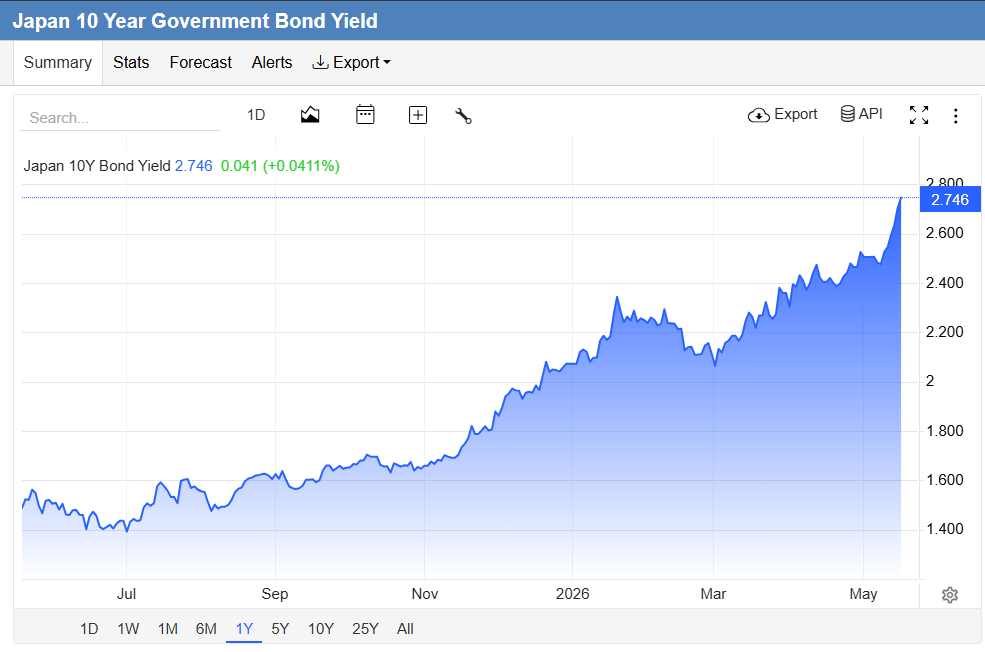
The surge reflects rising concern over inflation, debt sustainability, and fiscal stability in Japan. Investors are also reacting to higher oil prices, fresh borrowing risks, and weaker demand for longer-dated debt.
Japan’s Debt Worries Return to the Spotlight
According to a local media report, the latest pressure followed Prime Minister Sanae Takaichi’s announcement that her government is considering a supplementary budget. This raised expectations that Japan may issue deficit-covering bonds to finance support measures for households and businesses. The prospect added pressure to a market already sensitive to supply risks and weak investor appetite.
One official at a foreign securities house in Japan said no investors were actively buying bonds. The official further added that long-term interest rates would continue to rise.
Meanwhile, the International Monetary Fund’s latest Japan assessment placed gross public debt above 200% of GDP. Although the IMF expects a gradual decline over the medium term, investors remain focused on any sign of wider deficits.
Global Bond Yields Rise as Inflation Fears Spread
Japan’s bond selloff is unfolding alongside pressure in other major debt markets. Benchmark 10-year U.S. Treasury yields rose as much as 3.6 basis points to 4.631%, their highest level since February 2025.
Similarly, the two-year U.S. yield touched a 14-month high of 4.105%, while the 30-year Treasury yield reached a one-year high of 5.159%. The wider sell-off followed a sharp rise in oil prices.
Brent crude reached $111 a barrel as efforts to end the Iran war stalled after a drone strike at a nuclear power plant in the United Arab Emirates. Markets are now pricing in a more than 50% chance that the Federal Reserve will raise rates by December. Before the war, investors had expected rate cuts this year.
Yen Volatility and Liquidity Risks Move Into Focus
The yen also weakened as bond pressure intensified. The dollar briefly rose above 159 yen in Tokyo trading, its highest level since April 30. DBS senior rates strategist Eugene Leow said additional fiscal spending from Japan had worsened bond market sentiment.
He described the move as part of a rolling repricing across regional yield curves. Eurozone bonds also came under pressure. Germany’s 10-year yield hit a 15-year high of 3.193%, extending last week’s 14 basis point rise.
For now, however, Japan’s bond market is becoming a key global risk signal. If yields keep rising, investors may watch for yen volatility, foreign bond repatriation, tighter global liquidity, and weaker demand for risk assets.
Nevertheless, the pressure may ease if inflation cools, but a mix of high debt, higher energy costs, and new borrowing needs leaves Japan’s fiscal outlook under sharper market scrutiny.
Related: Iran Introduces Bitcoin-Based Maritime Insurance Platform for Hormuz Shipping
Disclaimer: The information presented in this article is for informational and educational purposes only. The article does not constitute financial advice or advice of any kind. Coin Edition is not responsible for any losses incurred as a result of the utilization of content, products, or services mentioned. Readers are advised to exercise caution before taking any action related to the company.