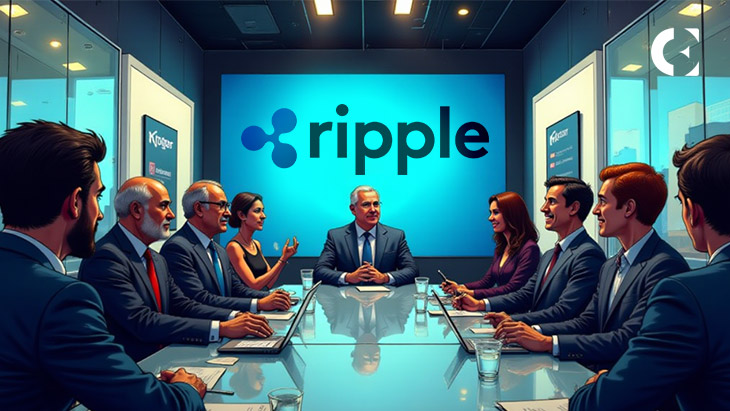

- Ripple co-founder among investors have backed Senator Kirsten Gillibrand’s son’s APEC, which raised $30M.
- Many investors have prior ties to Kirsten’s campaigns and networks from Wall Street, VC, and Stanford.
- Kirsten denies links in her son’s crypto startup as Ripple backing raises influence concerns in Congress.
Ripple co-founder and executive chair of Ripple Labs Chris Larsen is among the investors backing the American Perpetuals Exchange Corp (APEC), a derivatives platform founded by Senator Kirsten Gillibrand’s son Theodore Gillibrand. APEC has reportedly raised approximately $30 million from the investors, with most individual contributions ranging between $5,000 and $10,000.
Ripple Co-Founder Backs Senator’s Son $30M Crypto Startup
According to sources, Chris Larsen is among the investors backing Senator Gillibrand’s 22-year-old son’s APEC. Theo, a recent Stanford University graduate, launched APEC to offer perpetual futures contracts linked to U.S. stocks and stock indices.
The new derivatives trading platform raised approximately $30 million in funding, with the company valued at around $300 million as of June 18, 2026, in a round led by investment firm Lux Capital.
Why APEC’s Investor List Is Raising Influence Concerns
Most individual angel investors like Chris Larsen, and longtime donors to Senator Gillibrand’s political campaigns including John Griffin and Mark Ein contributed between $5,000 and $10,000 each. This has raised concerns of possible conflicts of interest, and whether Gillibrand has enough distance between her son’s startup and her legislative duties.
The timing has also amplified the controversy. APEC closes its funding cycle as Congress debates the CLARITY Act and other legislation to regulate the crypto market more broadly, with Senator Gillibrand leading the charge for digital asset policy. Her impact on important crypto laws has led to speculation among critics about potential conflicts of interest with investors.
Moreover, ethics watchdogs argue that investments in family-run businesses tied to regulated sectors create at least the impression of influence, even if there is no direct involvement. Gillibrand herself has stated that no bill should allow members of Congress or officials to “get rich off of these industries because of their insider status.”
What’s Next for APEC Amid Influence Concerns?
APEC plans to seek approval from the Commodity Futures Trading Commission (CFTC) despite the scrutiny surrounding its investor list and family ties to Senator Kirsten Gillibrand. Short-term priorities for the company include navigating the regulatory approval process, building out its trading infrastructure, and addressing compliance requirements under evolving market structure rules.
Conversely, Gillibrand’s influence concerns could create headwinds. Heightened media and congressional attention could lead to additional ethics reviews or calls for greater transparency around APEC’s operations and any potential indirect benefits.
Senator Gillibrand has stated she has no involvement in her son’s venture: “My son is a grown adult starting his own independent business. I have no involvement in it whatsoever.” Larsen’s representative noted he is “proud to support the organization.” Therefore, for APEC, success will depend on securing approvals, executing its product roadmap, and navigating heightened political and public attention.
Related: Trump Distances Himself From Finances After Crypto Income Tops $1.4 Billion
Disclaimer: The information presented in this article is for informational and educational purposes only. The article does not constitute financial advice or advice of any kind. Coin Edition is not responsible for any losses incurred as a result of the utilization of content, products, or services mentioned. Readers are advised to exercise caution before taking any action related to the company.