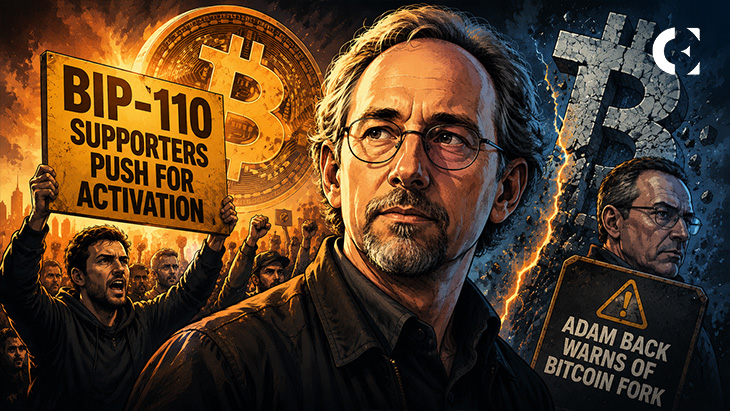

- Adam Back says BIP-110 is technically flawed and lacks the broad consensus needed for Bitcoin adoption.
- Critics argue BIP-110 has limited node and miner support, making activation highly unlikely.
- Supporters see BIP-110 as anti-spam protection, while opponents warn it could deepen community divisions.
Debate over Bitcoin governance is intensifying as supporters of BIP-110 continue pushing anti-spam transaction filtering rules. Critics, including Adam Back, argue the proposal lacks both technical merit and broad community support.
Back Rejects BIP-110
The latest debate began after Bitcoin veteran Fred Krueger endorsed BIP-110. He argued that Bitcoin should be reclaimed as an “activist-led network.”
Software engineer Vinnie ₿itcoins also backed the proposal. He said it could help “make Bitcoin money again.”
Back strongly disagreed. He described BIP-110 as “technically defective” and said it lacks both technical and ecosystem consensus.
According to Back, the proposed activation method is unlikely to succeed. Instead of gaining broad adoption, he believes supporters would end up forking away from the main Bitcoin network.
He also argued that proponents underestimate how difficult it is to change Bitcoin. Even proposals with widespread support face major obstacles before activation.
Questions Over Consensus
Bitcoin advocate Daniel said BIP-110 supporters are overstating node support for the proposal.
He noted that most Bitcoin nodes do not currently enforce BIP-110 rules. As a result, miners have little economic incentive to signal support.
Daniel compared the situation to SegWit’s activation. He said SegWit succeeded because it had support from nodes, exchanges, miners, and other key participants. In contrast, he believes BIP-110 lacks that level of ecosystem alignment.
Back agreed. He said Bitcoin is intentionally resistant to change. Attempts to push controversial upgrades without a broad consensus often lead to minority-chain forks that fail to gain traction.
Debate Shifts Beyond Technical Issues
The discussion later expanded beyond the proposal itself and into questions of influence within the Bitcoin ecosystem.
Adam Simecka argued that many Bitcoin Core supporters have financial ties to the industry. He claimed people outside the ecosystem are more likely to support BIP-110.
Back dismissed the argument. He said only a small group of users supports what he called a “broken filter proposal”. He also reiterated that BIP-110 lacks meaningful support from both technical and economic stakeholders.
Meanwhile, commentator Alex Bergealex criticized the growing online drama. He suggested much of the conflict is confined to social media and does not reflect broader market concerns.
Critics Question Anti-Spam Effectiveness
One of Back’s strongest objections concerns BIP-110’s goal of reducing spam transactions. Responding to comments from Start9 Labs, Back argued that the proposal would not effectively stop the types of data embedding and spam techniques it targets.
According to him, users could still exploit witness discounts and other transaction structures that BIP-110 does not block.
He also warned of unintended consequences. In particular, he said the proposal could disrupt existing tools and applications, including those built with Miniscript.
Supporters Discuss Potential Fork Scenario
As the debate intensified, some supporters discussed what could happen if BIP-110 were activated and later rejoined the broader Bitcoin network.
Back rejected that scenario outright. He said there is virtually no chance the proposal achieves activation through consensus.
Instead, he predicted supporters would simply “fork off and find out.” In his view, that would create a low-hashrate minority chain while Bitcoin continues operating unchanged.
Back added that concerns about transaction spam are understandable. However, he believes BIP-110 would do little to solve the issue and could further divide the community.
Governance Questions Persist
Bitcoin commentator Fundamentals 40HPW also criticized the proposal. He said BIP-110 attempts to define what counts as a legitimate Bitcoin transaction. In his view, markets—not protocol gatekeepers—should determine transaction value and usage.
Despite opposing the proposal, he acknowledged that broader governance questions remain unresolved.
According to him, rejecting BIP-110 does not end the debate over Bitcoin’s future. It only removes one controversial approach from consideration. Back echoed a similar view. He argued that Bitcoin’s resistance to change is one of its core strengths.
He noted that failed forks have historically reinforced the network’s immutability. They demonstrate how difficult it is to change consensus rules without overwhelming support.
As the proposed activation date approaches, BIP-110 has become one of the most closely watched governance debates in the Bitcoin community. Some see it as a defense against spam, while critics argue it lacks the consensus needed to succeed.
Related: Adam Back Says Bitcoin Consensus Can’t Be Swayed by AI Narratives
Disclaimer: The information presented in this article is for informational and educational purposes only. The article does not constitute financial advice or advice of any kind. Coin Edition is not responsible for any losses incurred as a result of the utilization of content, products, or services mentioned. Readers are advised to exercise caution before taking any action related to the company.